



Scientists uncover a hidden feature of protein translation in green algae, offering a new perspective on the basic rules of gene expression.
Biological and Environmental Research
December 1, 2025 Estimated Read Time min
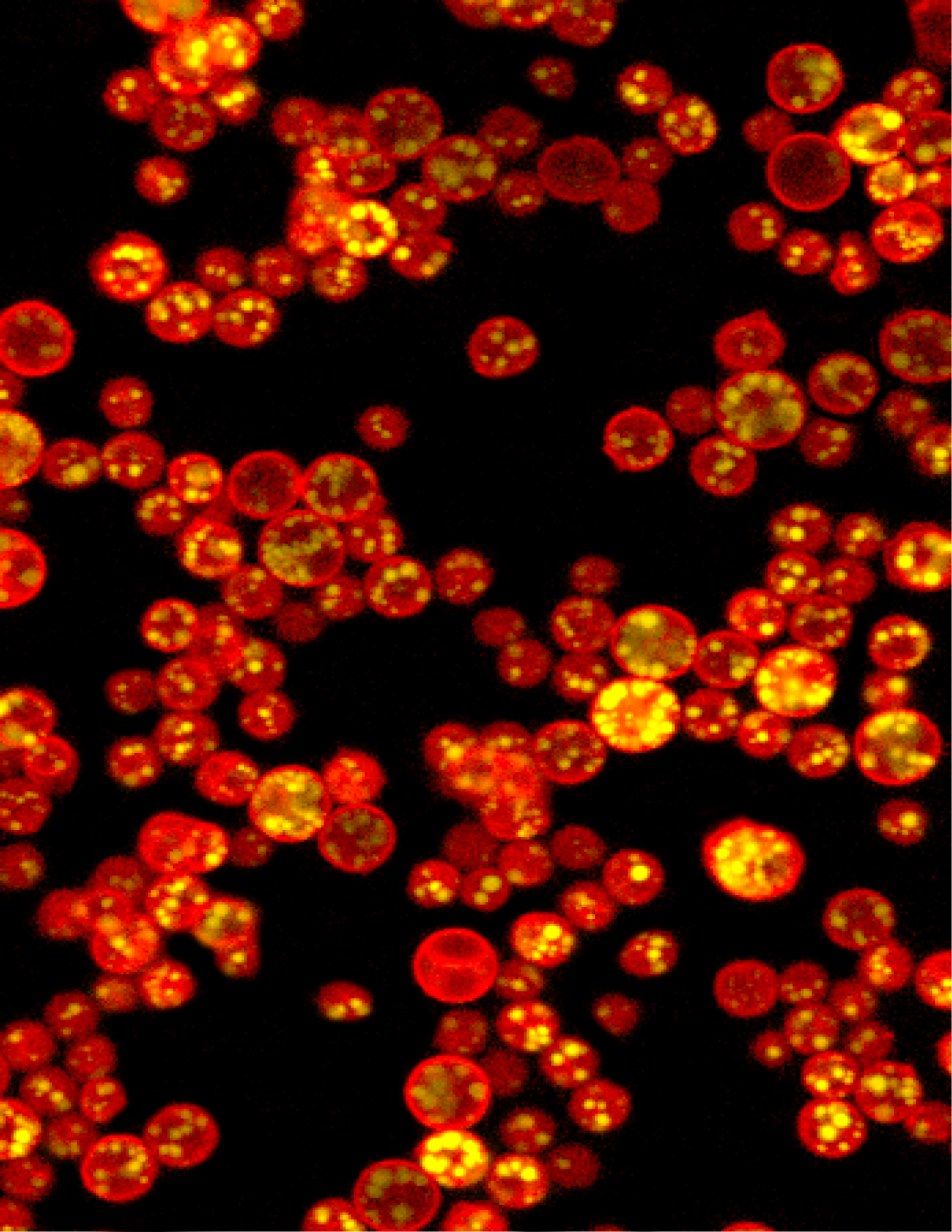
The Science
Genes are coded in DNA, a nucleic acid. In cells, genes are “transcribed” into messenger RNAs (mRNAs), which are another nucleic acid. The genes are then “translated” into proteins. The ribosome is the cell’s translation machinery. It makes proteins by “scanning” the mRNA molecule until it finds a start signal to begin making the protein. In general, animal and plant cells produce one type of protein per mRNA molecule. But in green algae, one mRNA has the information to make two different proteins. Scientists discovered that the algal ribosome sometimes skips the first start signal and begins at a second one on the same mRNA to make two proteins. The amount of each protein is dependent on additional features of the start signal.
The Impact
Scientists long thought that this kind of protein expression activity was extremely rare outside of viruses, where it has often been observed. This discovery in green algae challenges that view. It expands our understanding of how cells control which proteins they make. This knowledge could be useful in real-world applications. By modifying the strength of a start signal, scientists have the potential to control the production of each of the two proteins encoded on one mRNA. This provides a powerful tool for bioengineering. It also opens the door to finding similar translation mechanisms in other organisms like plants, animals, and fungi used in biotechnology.
Summary
Textbook dogma states that nucleus-encoded genes are monocistronic, meaning each transcribed mRNA produces a single protein. However, advances in sequencing technology have unveiled exceptions to this rule in green algae. In these organisms, numerous genes give rise to bicistronic mRNAs capable of producing two distinct proteins. Despite their prevalence, the mechanism behind this unconventional form of gene expression remained unclear.
Researchers uncovered that this phenomenon is most likely driven by a process known as leaky scanning. In this process, the ribosome occasionally bypasses the first translation start codon when it is embedded in a weak sequence context. This change allows it to initiate translation further downstream. This skipping is influenced by the degree to which the sequence surrounding the start codon deviates from the optimal consensus sequence. This hypothesis was supported by comparative computational analysis of algal genomes and proteomes as well as in vivo mutational analysis. Scientists were able to recapitulate this mechanism in synthetic bicistronic mRNAs. This approach enables tunable co-expression of two proteins from a single promoter. It opens the door to developing new strategies for regulated gene expression in synthetic biology and metabolic engineering applications.
Contact
Sabeeha Merchant
University of California, Berkeley
sabeeha@berkeley.edu
Jeffrey Moseley
University of California, Berkeley
jlmoseley@berkeley.edu
Funding
This work was supported by the Department of Energy (DOE) Office of Science, Biological and Environmental Research program. Additional funding was provided by the National Institutes of Health (NIH) Genetics Immersion Training Program and the California Institute for Quantitative Biosciences at UC Berkeley (QB3-Berkeley).
Publications
Dueñas, M.A., et al., Leaky ribosomal scanning enables tunable translation of bicistronic ORFs in green algae. Proceedings of the National Academy of Sciences 122 (9), e2417695122 (2025). [DOI: 10.1073/pnas.2417695122]
Related Links
Focus on: PhD candidate Marco Dueñas, UC Berkeley QB3