



The Nuclear Emergency Support Team (NEST) is NNSA’s multi-mission nuclear emergency response capability that leverages the Department of Energy’s world-class scientists and technical experts to contend with the Nation’s most pressing radiological and nuclear challenges. NEST is the umbrella designation that encompasses all DOE/NNSA radiological and nuclear emergency response functions, some of which date back more than 60 years. These include all field-deployed and remote technical support to the Nation’s countering weapons of mass destruction (WMD) operations, including Preventive Nuclear and Radiological Detection (PNRD) and threat-based nuclear search; public health and safety missions, including radiological consequence management; and responses to U.S. nuclear weapon accidents and incidents. Additionally, NEST maintains operational capabilities that enable nuclear forensic analysis of nuclear material used in an improvised nuclear device or interdicted outside of regulatory control. NEST’s motto – “Scientifically Informed, Operationally Focused” – reflects the technical underpinning of its diverse operational missions.
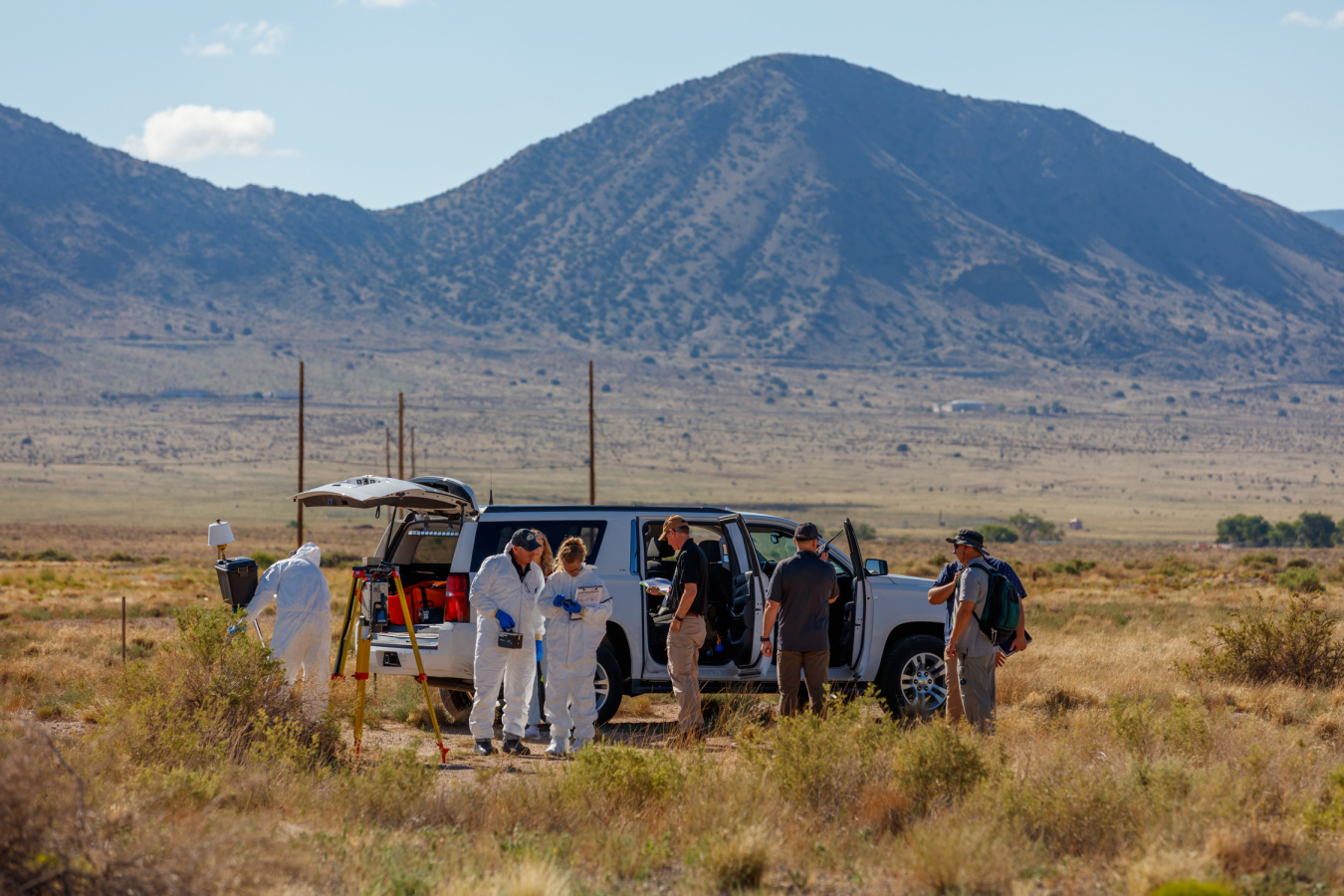
Counterterrorism and Counterproliferation
Read more about NNSA's efforts.

NEST is composed of world-class scientists, engineers, emergency managers, and technicians recruited from the National Laboratories, plants, and sites who execute the incident response missions for which DOE and NNSA are responsible. These missions derive from a body of legal statutes, presidential policies, and international agreements that prescribe the Department’s specific roles in responding to various contingencies.
NEST’s core competencies includes specialized knowledge of U.S. nuclear weapons, improvised nuclear devices (IND), and radiological dispersal devices (RDDs, or “dirty bombs”). NEST expertise includes, but is not limited to, the following scientific disciplines: spectroscopy, device modeling, radiography, device assessment, atmospheric modeling, radiological environmental monitoring, dose assessment, medical effects of radiation, and technical nuclear forensics.
NEST conducts operations in close coordination with federal mission partners, including the Federal Bureau of Investigation (FBI), Department of Defense (DoD), and Department of Homeland Security, as well as state, local, tribal, and territorial governments during crises. As part of its long-term strategy, NEST continues to enhance regional capabilities to conduct time-critical actions to protect the public, key infrastructure, and the environment from nuclear and radiological dangers. Additionally, NEST ensures that cutting-edge technology and scientific innovation are continuously incorporated into its operations.
Specific capabilities include the following elements, which can be reached by contacting the Consolidated Emergency Operations Center.
You can take a look back at the many historic moments related to NEST’s formation by clicking through our interactive timeline.
The Accident Response Group (ARG) is composed of nuclear weapons experts who are on call to deploy rapidly within the United States and worldwide in response to accidents and significant incidents involving U.S. nuclear weapons or weapons components in DoD custody. ARG scientists, technical specialists, and crisis managers work closely with the NNSA Office of Defense Programs and DoD. Its personnel actively participate in the annual interagency Nuclear Weapon Accident Incident Exercise (NUWAIX) that is designed to practice a whole-of-government response to nuclear accidents and incidents.
AMS is a rapidly deployable capability that can respond to all manner of nuclear incidents and accidents in the United States and overseas. AMS consists of a fleet of aircraft equipped with specialized radiation detection systems to provide real-time measurements of air and ground radiation contamination. AMS scientists, technical personnel, and pilots are on-call 365 days per year / 24 hours per day to deploy in response to nuclear incidents and accidents.
The Detonation Assessment Program (DAP) provides emergency response capabilities to assess nuclear detonation debris and prompt signal measurements to help determine the design of the nuclear device that produced the explosion and the origin of the nuclear materials used. DAP evaluations support national decision-making following a nuclear detonation, law enforcement efforts to hold perpetrators accountable, and public health and safety. DAP draws on National Laboratory scientists who are experts in nuclear detonation physics and device design to quickly perform the forensic scientific assessments needed during a response to a nuclear detonation.
Following a U.S. Government response to an incident involving an improvised nuclear device or radiological dispersal device, the Disposition and Forensic Evidence Analysis Team (DFEAT) scientists and technical personnel have responsibility for the disassembly, assessment, and disposition of nuclear threat devices in support of national investigations. DFEAT is comprised of federal and national laboratory experts with highly specialized equipment and facilities to support the nuclear forensics mission.
The DOE Forensics Operations (DFO) team is composed of technical experts from across the National Laboratory complex who are trained and equipped to perform nuclear forensics analysis following a nuclear detonation in support of the interagency effort to identify the perpetrator of the attack. DFO supports ground collection and processing of post-detonation debris to provide the highest quality samples for forensic analysis.
The Federal Radiological Monitoring and Assessment Center (FRMAC) is an interagency entity that coordinates federal radiological monitoring and assessment assistance to state, local, tribal, and territorial governments in response to nuclear accidents or incidents. FRMAC is responsible for providing a single source of compiled, quality-controlled monitoring and assessment data to the lead federal agency involved in the incident response. Under the National Response Plan, NNSA is responsible for maintaining FRMAC’s operational readiness.
Once a declaration to respond to a radiological emergency has been made, NNSA’s NEST will coordinate the response. The NEST Consequence Management Response Team (CMRT) will deploy to provide initial command and control as well as technical expertise for FRMAC. CMRT consists of management, technical, field monitoring, geographic information system, sampling, and hotline personnel. CMRT establishes initial operations in the field; it uses software developed to coordinate the rapid data collection, management, and analysis required during a radiological emergency. The software enables the interagency FRMAC assets to evaluate a radiological or nuclear incident efficiently and facilitate actions to protect public health and the environment.
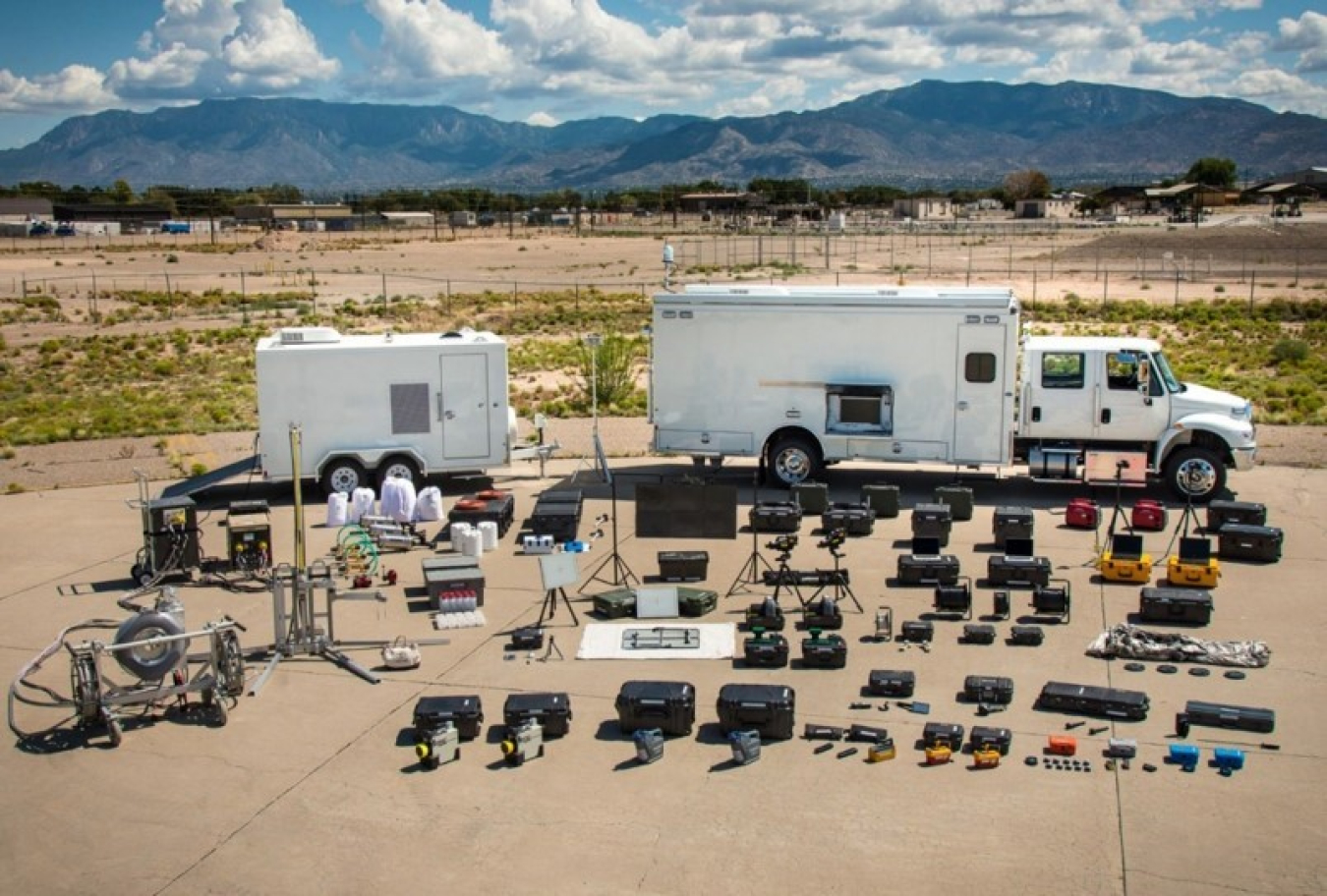 NEST equipment used by regional counter-WMD teams to characterize and defeat nuclear and radiological threat devices.
The Joint Technical Operations Team provides rapidly deployable technical and operational support to the FBI and DoD to counter WMD threats, including nuclear and radiological devices. Established in 1997, JTOT ensures that the full breadth of NNSA’s scientific knowledge of nuclear weapons and devices is brought to bear during the response to a nuclear threat, including technical support from the National Laboratories. JTOT personnel are on-call 365 days per year / 24 hours per day to respond to nuclear incidents.
JTOT personnel are closely involved in the execution of the “Capability Forward” initiative. Under this program, FBI counter-WMD teams in American cities are trained and equipped to take decisive action to defeat WMD threat devices, accelerating life-saving responses to nuclear and radiological attacks.

NNSA's National Atmospheric Release Advisory Center provides real-time assessment advisories to emergency managers during the response to a nuclear or chemical event.
The National Atmospheric Release Advisory Center (NARAC) assists federal, state, and local officials in making life-saving decisions following the inadvertent or intentional release of radioactive material. NARAC can rapidly deliver tools and expertise to map the spread of this material in the atmosphere, often providing the first scientifically defensible and actionable analysis that decisionmakers can use to protect the public in an emergency. NARAC’s capabilities can be applied to a wide range of hazardous contingencies, including terrorist attacks involving radiological dispersal devices (“dirty bombs”), chemical and biological attacks, hazardous waste releases, and chemical plant explosions.
Since its inception during the partial meltdown at Three Mile Island in 1979, NARAC has been instrumental in responding to nuclear incidents of enormous global consequence, including the 1986 Chernobyl nuclear reactor disaster, the 2011 Fukushima Daiichi nuclear accident, and the non-nuclear1980 Titan missile explosion near Damascus, Arkansas. In 2017, a significant, unattributed release of the radioisotope ruthenium-106 was detected across central and eastern Europe and Asia. A NARAC analysis using weather patterns and other data implicated Russia as the source of the release.
Additionally, NARAC capabilities have been brought to bear in response to many non-nuclear incidents that threatened public health and safety. In the aftermath of Hurricane Katrina in 2005, for example, NARAC and the Federal Emergency Management Agency’s Interagency Modeling and Atmospheric Assessment Center (IMAAC) provided airborne-hazard predictions for several major industrial fires and chemical facilities at risk. In 2008 NARAC and IMAAC predicted the health threat from the venting of sulfur dioxide from the Kīlauea volcano in Hawaii. NARAC experts also performed analysis following the 2010 Deepwater Horizon oil spill and the 2010 eruptions of the Eyjafjallajökull volcano in Iceland. As recently as 2020, NARAC’s operations center supported the National Aeronautics and Space Administration (NASA) in its preparations for the Mars Perseverance Rover launch, providing analyses of potential launch anomalies involving the rover’s plutonium-fueled radioisotope thermal generator to federal, state, and local emergency responders and decision makers.
The National Search Team (NST) is composed of scientists, engineers, and technical support personnel from the DOE National Laboratories. Equipped with specialized training and advanced instrumentation, NST personnel stand ready to search for nuclear threat devices based on a variety of signatures and intelligence in concert with federal mission partners. These capabilities are highlighted in the 2018 National Strategy for Countering Weapons of Mass Destruction Terrorism, which notes the U.S. Government’s ability to deploy “highly mobile, responsive counter-WMD teams that can search for dangerous materials over wide areas based on a variety of threat intelligence.” Once a nuclear or radiological threat device is interdicted, the specialized knowledge and equipment of NEST’s Joint Technical Operations Team is used to characterize and render the device safe.
The primary mission of the Nuclear Forensics-Material Analysis Program (NF-MAP) is to receive and characterize pre-detonation nuclear material samples to support attribution of an attempted or actual nuclear event. NF-MAP supports both law enforcement efforts to hold perpetrators accountable for illicit uses of nuclear materials, as well as national decision-making surrounding a nuclear security event. Nuclear forensics results for law enforcement investigations must meet current standards for admissibility of evidence at trial. The DOE/NNSA national laboratories capable of determining nuclear material characteristics at the highest level of quality to meet these standards are designated as NF-MAP laboratories. The NF‑MAP laboratories are supported by analyses performed at National Nuclear Materials Archive laboratories, which identify, collect, preserve, and analyze forensically valuable nuclear material specimens.
The Radiation Emergency Assistance Center / Training Site (REAC/TS) is the Nation’s foremost center for medical advice on the management of radiation injuries, providing scientific expertise, specialized training, and onsite assistance for the treatment of radiation exposure accidents to medical professionals around the world. These world-renowned capabilities allow emergency responders to provide rapid advice to mitigate harm to populations affected by radiation exposure. REAC/TS scientists and technical personnel maintain a 24/7 national and international response capability and provide continuing medical education and outreach exercises, reaching thousands of medical professionals, emergency responders, and health physicists globally each year.
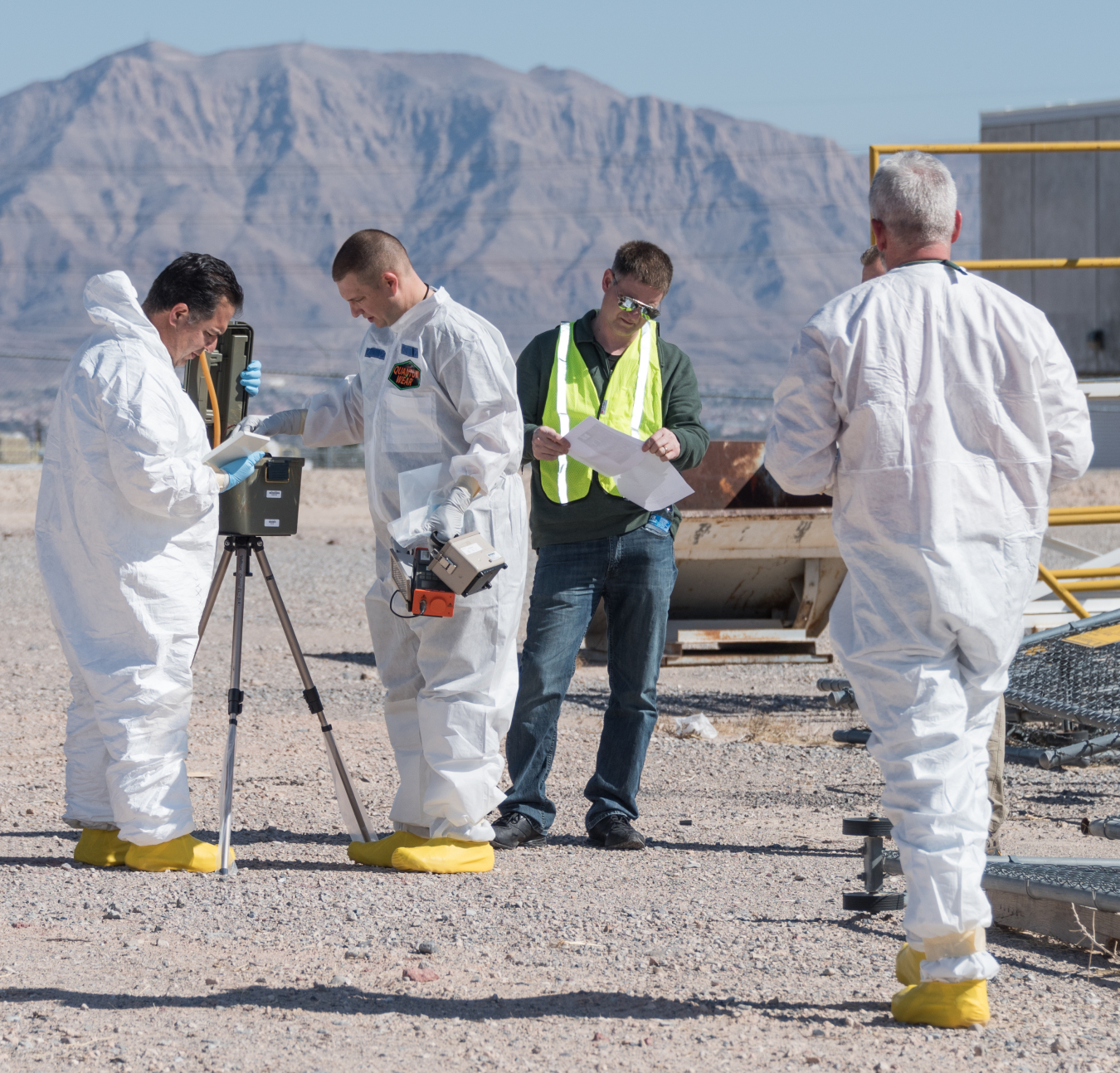 Radiological Assistance Program (RAP) personnel prepare an air sampler during consequence management equipment training.
The Radiological Assistance Program (RAP) is the Nation’s premier first responder organization for assessing radiological incidents. RAP advises federal, state, local, and tribal public safety officials, first responders, and law enforcement personnel on steps to protect public health and safety or the environment during incidents involving radioactive materials. RAP personnel are often the first NNSA response team on the scene of a radiological emergency to assess the situation and recommend what steps to take to minimize the hazard. NEST maintains RAP teams at 12 National Laboratories across the United States, each of which is responsible for the surrounding geographic region.
RAP teams maintain relationships with local and regional mission partners, including FBI WMD Coordinators in the U.S. cities that host Stabilization teams, which are trained and equipped to counter nuclear and radiological threat devices. RAP personnel also coordinate with the Department of Homeland Security’s Countering Weapons of Mass Destruction Office (CWMD) to provide support for National Special Security Events. Read more about RAP in the RAP 60th Anniversary brochure.
NNSA's Radiological Assistance Program celebrates 60 yearsNNSA