



New supercomputer ranks within top 100 most powerful computers in the world.
January 29, 2026 Estimated Read Time min
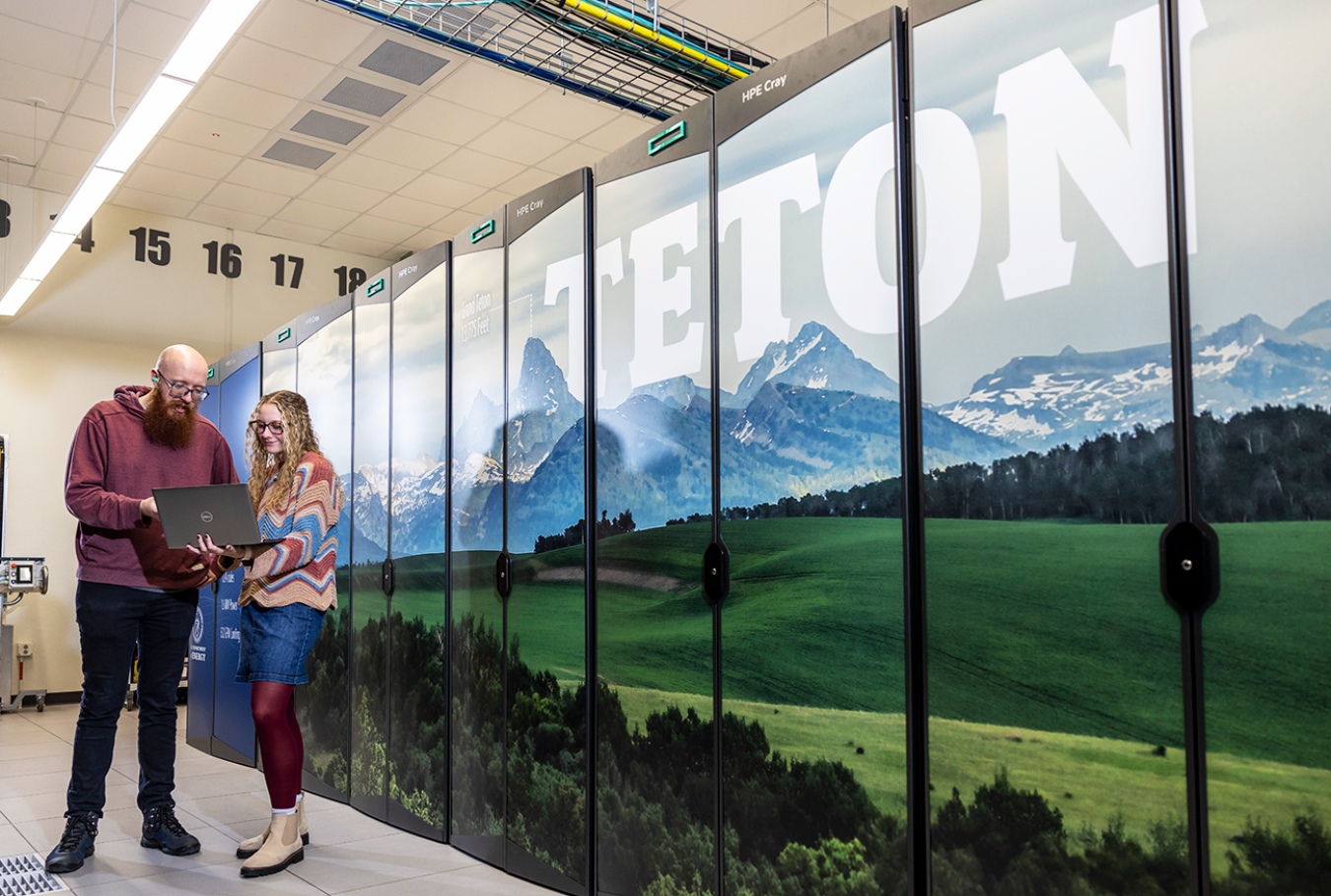
Idaho National Laboratory (INL) recently announced that Teton, the newest supercomputer to join the lab’s Collaborative Computing Center, is now available to users.
Teton quadruples the lab’s high-performance computing capacity and will help meet the growing demand for computational resources required to accelerate reactor deployment and help usher in President Trump’s nuclear renaissance in the United States.
Teton can be accessed through the U.S. Department of Energy’s Nuclear Science User Facilities (NSUF) to support the nation’s nuclear energy-related research projects.
Smaller and Faster, Teton is Born to Run
Teton is INL’s new flagship supercomputer, taking the mantle over from Sawtooth, which was commissioned in 2020.
With the ability to perform 20.8 quadrillion calculations per second, Teton is ranked as the 85th fastest computer in the world, making it four times more powerful than Sawtooth while weighing in at only one-third the size.
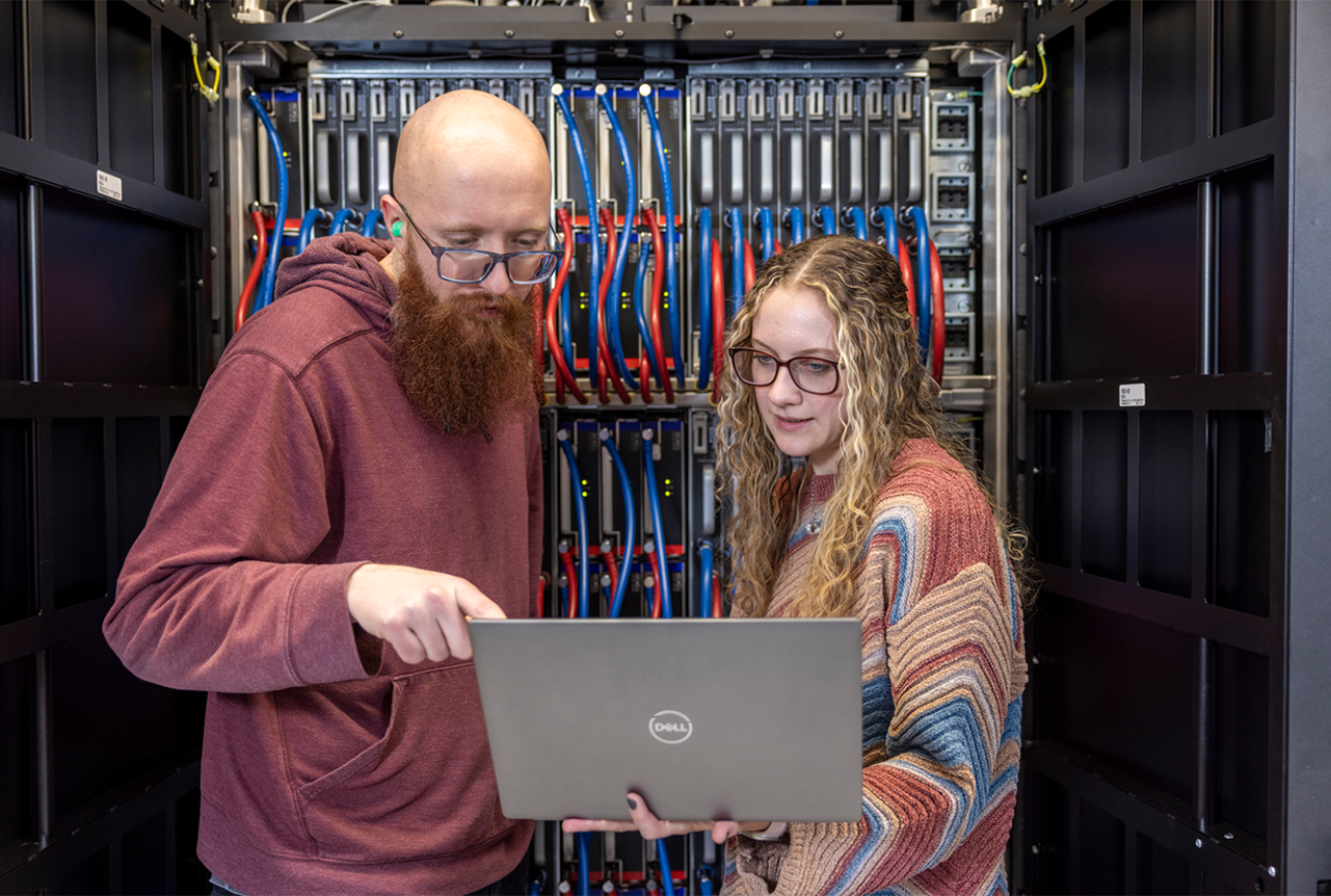
Teton is able to process more information faster thanks to advancements in its central processing unit (CPU) design. CPUs act like the brain of a computer and are capable of processing complex mathematical calculations and data.
Teton was specially designed to be one of the world’s largest CPU-only systems to better accommodate the modeling and simulation codes of users working on nuclear reactor designs, which are often more suited to CPU than graphics processing unit (GPU) systems. Computations that once took days to complete will now be done in hours.
"This represents a significant investment in the computational infrastructure needed to accelerate advanced reactor deployment," said NSUF Director Brenden Heidrich. "Teton will enable researchers to model and simulate next-generation nuclear technologies with unprecedented fidelity, dramatically reducing the time from concept to deployment for critical nuclear energy projects.”
What’s Next?
Prior to Teton’s commissioning, the Collaborative Computing Center was oversubscribed with more requests to access the system than could be accommodated.
Now active and online, Teton will shorten the wait time for researchers seeking to use the modeling and simulation capabilities of the Center to advance the designs of nuclear materials and technologies.
Sawtooth, along with the Center’s other supercomputers — Bitterroot, Hoodoo, and Wind River — will continue operating along with Teton to help meet the high user demand from industry, national laboratories, and academia.
NSUF is the U.S. Department of Energy’s only designated nuclear energy user facility program. NSUF provides nuclear energy researchers access at no cost to a wide variety of resources at Idaho National Laboratory and partner institutions.
Learn more about NSUF High Performance Computing resources.