



Step 10 of the site-level federal fleet ZEV Ready process is to complete the site assessment and design electric vehicle supply equipment (EVSE).
Navigate the ZEV Ready Process
| Design Phase Steps |
|---|
| 8. Engage with key site stakeholders |
| 9. Coordinate with local utility service |
| 10. Complete site assessment and design EVSE |
| 11. Identify EVSE at non-agency locations |
| 12. Work with leadership to secure EVSE funding |
Return to the ZEV Ready Center to see all 15 steps.
Primary Audiences
 | Site ZEV Champions |
 | Site Location Fleet Managers |
 | Facility Infrastructure Managers |
 | Facility Energy Managers |
The site ZEV champion, site location fleet manager, facility infrastructure manager, and facility energy manager are the primary audiences for the design of EVSE at the fleet location.
The entire EVSE design and deployment process requires effective coordination across all key fleet and facility stakeholders. This includes not only the assessment of optimal charging station design to support fleet operations, but also accounts for impacts on facility operations and opportunities for workplace, visitor, and other co-located charging opportunities.
EVSE planning to support zero-emission vehicles (ZEVs) at non-agency locations (where the agency does not have authority to make EVSE decisions) is discussed in Step 11: Identify EVSE at Non-Agency Locations.
Overview: Complete Site Assessment and Design EVSE
Once the "plan" phase is complete, and the site ZEV champion has initiated coordination of fleet electric vehicle (EV) efforts with the key stakeholders at the fleet location, the team of key fleet stakeholders will translate the high-level ZEV acquisition and EVSE deployment plans (discussed in Step 5: Identify ZEV Opportunities and Step 6: Identify EVSE Opportunities) into site-specific solutions. The accordion sections below outline the primary actions in designing EVSE at each fleet location.
The site ZEV champion and key fleet stakeholders should first identify the EVSE needs at the fleet location, including evaluating how many and what type of charging stations are required. This includes determining which vehicles will have access to the EVSE, including opportunities for workplace charging.
Next, fleet locations should complete a siting analysis to help choose the charging station locations, guide site designs, and evaluate power requirements. FEMP and the National Laboratory of the Rockies (NLR) developed EVI-LOCATE (Electric Vehicle Infrastructure Locally Optimized Charging Assessment Tool and Estimator), a web tool for EVSE siting, design, and cost estimates, to support this analysis.
As discussed in Step 9: Coordinate with Local Utility Service, installing EVSE, with the possible addition of large electrical load, may impact power needs at the facility. In designing EVSE solutions at fleet locations, stakeholders should consider managed charging options to help optimize vehicle charging and to support building load management. Additionally, sites should evaluate advanced charging options, including bidirectional charging to minimize load impacts.
After completing a preliminary EVSE design, the site ZEV champion should develop an EVSE cost estimate, using the EVI-LOCATE tool or other methods. The site ZEV champion then refines and prioritizes designs based on available funding sources.
EVSE design has wide impacts across the fleet location, including both fleet and facility operations. Effective coordination between all key fleet and facility stakeholders are critical for successful EV implementation at the fleet location.
For stations available to privately owned vehicles or the public at large, federal agencies should consider the standards and requirements for projects funded under the National Electric Vehicle Infrastructure (NEVI) Formula Program. Some of the pertinent requirements are listed below:
- EVSE installers should have appropriate licenses, certifications, and training.
- Chargers must remain functional when network connectivity is disrupted.
- Chargers should display the price for charging prior to initiating a charging session.
- Stations should ensure the average uptime of charging stations is at least 97%.
Identify EVSE Needs
This section guides the process of identifying which EVSE is right for your fleet and facility. To identify your EVSE solution, you must first evaluate how many and what type of charging stations you will need to acquire. The table below describes questions and considerations for federal fleet EVSE needs that are then each explored in the sections that follow.
| Question | Investigate | Recommendation |
|---|---|---|
| How many EVSE ports should be located at the site? | How many battery electric vehicles (BEVs) and plug-in hybrid electric vehicles (PHEVs) will be deployed at the fleet location over the next 5 years? Are there other existing charging stations the EVs can use? | Install enough EVSE to support all ZEVs planned for the next 5 years. Consider how many EVSE are already available on site to support planned ZEVs as well as the anticipated ratio of EVSE to ZEVs needed to support fleet operations. |
| What type of EVSE unit do I need? | What are ZEV driving patterns? When and where will vehicles be charging? Will charging be scheduled to avoid power demand peaks? How many EVs will be charging simultaneously? | Level 2 EVSE typically supports BEV charging needs. Level 1 EVSE typically is sufficient to support PHEVs. |
| Who will have access to the EVSE? | Will privately owned vehicles (POVs) have access to the EVSE? | POV charging is encouraged; federal fleets must recoup expenses for electricity and potentially other infrastructure costs as well. |
| What are the data management needs? | What is the payment process for fleet and non-fleet vehicles? What is the need for data collection and communication? | Data collection streamlines reporting of electricity use per vehicle but adds costs. Managing access and payment processing requires additional networking and communication capabilities. |
Determining the number of EVSE ports needed at the fleet site location is informed by:
- The number of parking spaces at the location
- The number of ZEVs planned for the site
- The anticipated ratio of EVSE to ZEVs needed to support fleet operations.
In the fleet ZEV Ready process, the fleet location should develop EVSE deployment plans before executing any ZEV acquisitions. EVSE should be installed before ZEVs arrive, if possible, especially BEVs.
EVSE Port Counts for New or Renovated Parking Lots
The number of parking spaces informs both the minimum and maximum number of EVSE that may be required at the facility. Section 6.5.7.8 of the General Services Administration's (GSA's) Public Building Service (PBS) P100 Facilities Standards establishes mandatory minimum standards for the installation of federal fleet EVSE infrastructure at GSA buildings for "any project significantly modifying or installing parking lots or parking garages." The "quantity and configuration of chargers and ports must be designed to accommodate tenant vehicle usage and locations" as follows:
- Lots with less than five federal fleet vehicles should install, at minimum, two charging ports.
- Lots with 5 to 15 federal fleet vehicles should install, at minimum, four charging ports.
- Lots with greater than 15 federal fleet vehicles should install, at minimum, charging ports representing 30% of the total planned federal fleet vehicles.
EVSE Ports Based on ZEVs Planned for the Site
Fleets can save costs by installing enough EVSE to support the medium-term ZEV acquisition plans (approximately 5 years into the future) rather than procuring EVSE installation services as ZEVs are ordered each year. This helps minimize the number of installation projects and avoid duplicative costs in EVSE installation. This will help to reduce the per-port EVSE installation cost and avoid the burden of managing an excessive number of EVSE installation projects. Step 5: Identify ZEV Opportunities, provides detail on how to plan fleet ZEV acquisitions using ZPAC and other methods.
Ratio of EVSE Ports to Planned ZEVs
In the long term, at most larger locations where the dwell time of vehicles exceeds the required daily charging time, a single EVSE port can support more than just a single ZEV. At most locations with more than 10 vehicles, a ratio of at least 1.5 EVs to 1 EVSE port is common, and a 2:1 ratio of ZEV:EVSE ports may be achievable. Most smaller garages likely require one EVSE port per vehicle.
What are the primary factors in determining EVSE power level needs?
The type of EVSE needed depends on three main factors:
- Types of ZEV procured
- Operating characteristics of those vehicles
- Charging characteristics (e.g., overnight parking).
BEVs and PHEVs both require EVSE to charge. However, EVSE needs are different for each of these vehicle types and operating characteristics.
What are typical charging rates for the different types of EVSE?
The table below provides information to help you determine which charging level meets your needs.
Charging Level Approximate Rate of Charge for Light-Duty Vehicles Application AC Level 1 2 to 5 miles of range per hour of charging - Overnight
- Long-term parking
- Smaller batteries (e.g., LSEVs and PHEVs)
- Employee charging
AC Level 2 10 to 20 miles of range per hour of charging - Overnight
- Between trips
- Larger batteries (e.g., BEVs)
- Employee charging
- Public charging
DC Fast Charge 50 to 200 miles of range per 20 minutes of charging - Along highways
- Overnight for medium-duty and heavy-duty BEVs with large batteries (e.g., buses)
- Continual fleet operations (warehousing)
What are the charging power level considerations for PHEVs?
PHEVs have smaller batteries and relatively short electric ranges (~40 miles on average), and typically may fully recharge using Level 1 EVSE overnight (over a 12-hour period). To maximize electric miles traveled (which are less expensive and generate fewer emissions than gasoline miles), PHEVs should charge any time they return to the fleet location after driving. The vehicles are sold with 12-A charging cords that can plug into electrical outlets of 15-A or greater on dedicated circuits (i.e., no other devices should draw current from these outlets or circuits while PHEVs are charging). By leveraging the reliability of a receptacle and the provided Level 1 cord sets, PHEVs, as well as low-VMT BEVs can minimize infrastructure planning and costs.
What are the charging power level considerations for BEVs?
BEVs have larger batteries than PHEVs and comparably longer electric ranges (most exceed 200 miles). For most BEVs, Level 2 EVSE is typically required to fully recharge these larger batteries in a single night. Level 1 EVSE may be sufficient for some BEVs that exclusively travel short distances—50 miles per day or less. Some BEVs with high daily use or without the ability to dwell long periods between charging may require DC fast charging.
How do BEVs or PHEVs with variable daily usage affect charging needs?
There will be days when BEVs or PHEVs do not need to charge, either because they were not driven at all or because they return to the fleet location with a nearly full battery after a short trip. Fleet managers can minimize the number of EVSE installed by instructing drivers to park by EVSE and charge their vehicles only upon arriving with a battery state of charge below 80% (unless they plan on driving a long distance the following day).
How can fleets optimize a site's BEV to EVSE ratio?
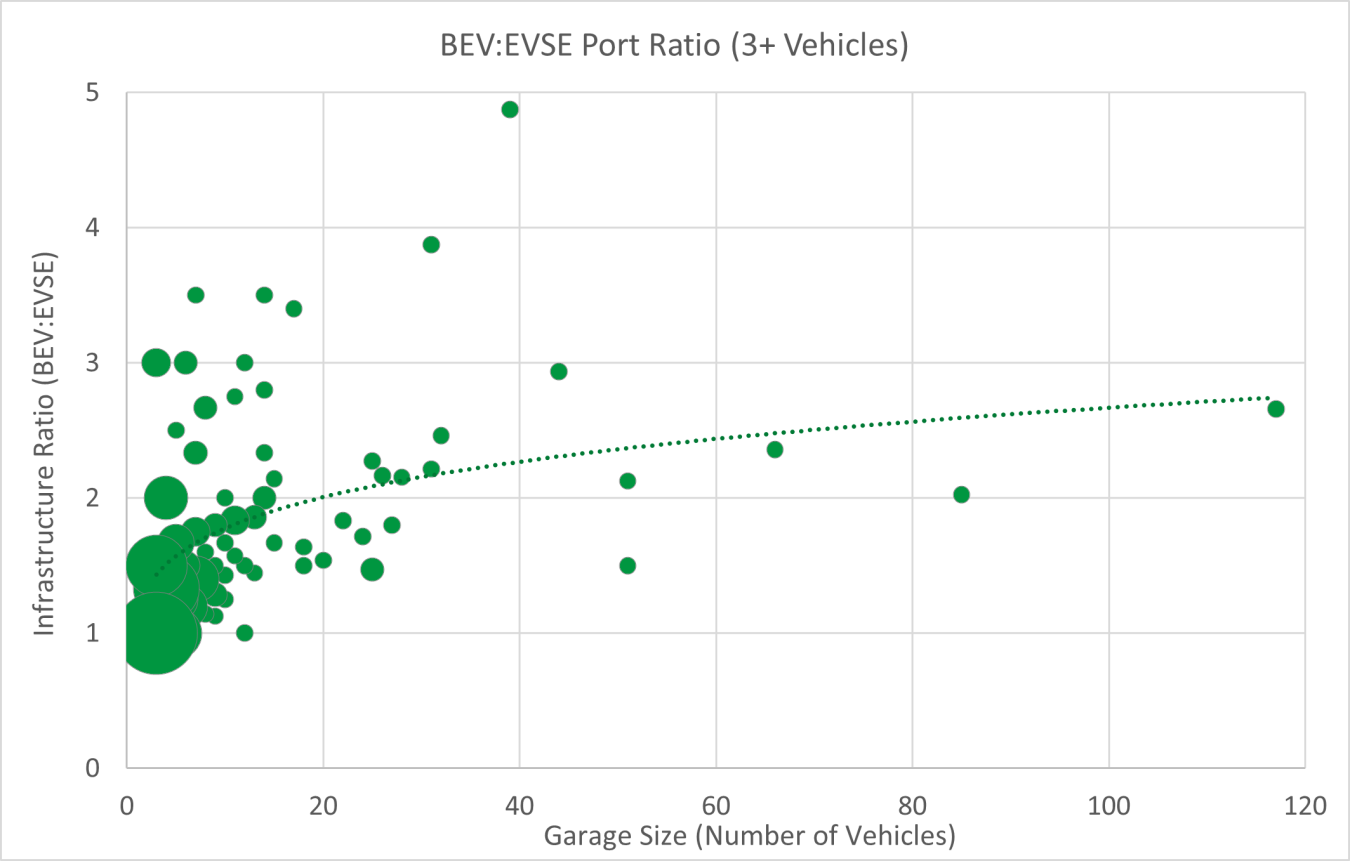 Figure 1. Fleets may determine BEV to EVSE port ratios of 2 or higher are sufficient to support charging needs at a fleet location.
In many cases, fleets do not need to dedicate a single charging port to a BEV. For example, BEVs that often travel short daily distances or are driven intermittently may only need a few hours of charging each day or not require charging every day. By sharing (or pooling) EVSE across a fleet of BEVs at a location, fleets can deploy more than one BEV per EVSE, reducing fleet EVSE deployment costs.
Fleets can optimize the number of EVSE required to support a fleet of BEVs through analysis of dwell times and charging needs, including the use of telematics data. In many cases, fleets may determine BEV to EVSE port ratios of 2 or higher are sufficient to support charging needs at a fleet location (e.g., 117 BEVs and 44 Level 2 EVSE ports, see Figure 1). This can save the fleet a significant amount of money and minimize electrical service upgrades, which often delay the installation of EVSE. This analysis is valuable for locations where three or more BEVs will park because the difference between installing a single or dual-port EVSE unit is normally minimal, and coincident charging is more likely with a smaller number of BEVs.
Optimizing a site's BEV to EVSE ratio is a great way to mitigate the installation costs of EVSE. It is also a simple way to reduce peak demand to mitigate equipment upgrades as well as demand charges. However, many fleets may be planning for future expansion and therefore installing more EVSE than BEVs for the time being.
When should fleet locations consider DC fast charging?
If overnight charging is not feasible for a BEV (e.g., vehicle has short dwell times or operates 24/7) or the daily driving operations regularly exceed the rated range, then it will likely need to charge at a DC fast charger. BEVs can charge at publicly available DC fast chargers while operating on the road, but the fleet site location may need to install DC fast chargers if operations are primarily on the facility campus or publicly available DC fast chargers are not available nearby.
After determining the right amount and type of EVSE, the key fleet stakeholders at the site should decide who will have access to the EVSE. The primary EVSE access decision at federal fleet locations is whether employees’ privately owned vehicles (POVs) may have access to charging stations deployed primarily to serve fleet vehicles. EVSE access levels (public, limited, or closed access) differ based on who can use the EVSE and how payment is received. Digital access management can support sharing of EVSE access and transaction processing for both POV and fleet vehicles.
Agencies are strongly encouraged to provide federal employees with access to fleet EVSE. Consider plans for workplace POV charging using the FEMP Workplace Charging Program Guide. Sharing EVSE access by both POV and fleet vehicles can reduce overall EVSE requirements at agency facilities, lowering overall installation costs and power concerns.
Providing access to POVs: Fees to recover charging station costs
Sec. 1413(c) of the Fixing America's Surface Transportation Act (FAST Act) authorizes federal agencies to install, operate, and maintain charging stations for POVs in parking areas used by federal employees and authorized users, and requires the collection of fees to recover these costs. Agencies are not required to collect fees for EVSE that was installed prior to December 2015 or that is installed or constructed for federal fleet vehicles, but that receives incidental use by POVs (42 U.S.C. 6364 (4)(B)).
Support for agencies on providing workplace charging opportunities under the FAST Act, including a uniform approach for developing fees for the use of EVSE by POVs is available from Federal Workplace Charging Program Guide. While this document identifies a uniform approach to reimbursement for the use of EVSE to support compliance with the FAST Act, it is ultimately the responsibility of each agency to ensure that reimbursement is recovered where required by the FAST Act or other applicable law. Agencies may also use DOE's Federal Workplace Charging Fee Calculator to input their actual costs and determine appropriate fees.
After answering these questions, fleets can determine how many and what type of EVSE is needed at the fleet location. Based upon the number of EVs, the best charging level(s) to use, data considerations, and the frequency and scheduling of ZEV charging, you should be able to determine the characteristics of the EVSE that you need for your site. The next step in completing an EVSE needs analysis is to determine how and where the EVSE will be installed.
EVSE Siting Analysis
After determining the EVSE needs at the fleet site location, the next step is to prepare for the placement of the EVSE to best serve the fleet's ZEVs. By completing a siting analysis, the fleet location will be ready to procure the EVSE, develop a statement of work, and contract for installation.
| Question | Investigate | Recommendation |
|---|---|---|
| Where does EVSE need to be installed? | Where will the EVSE and parking spaces be located for charging? How many spaces are needed? | Shorter distance from electrical service equipment to EVSE and minimizing hardscape trenching will minimize costs. Consider short relocations of ZEV parking spaces to minimize construction and power upgrades. Consider preferred or convenient parking locations (e.g., install EVSE close to the building entrance) and Americans with Disabilities Act (ADA) compliance. |
| How will charging stations be designed? | How will you design charging spaces to best support ZEV charging needs? | Incorporate site considerations into the charging station design, including power availability, cord management, walkways, mounting, lighting, shelter from weather, signage, and mounting and/or protection (e.g., wheel stops or bollards). |
| What electrical service upgrades are needed? | What is the remaining capacity (equipment capacity minus existing electrical load) on the service panels and transformers near the preferred ZEV parking location? | Consult with the facility manager, staff electrician, on-site engineers, or contract support to complete an EVSE site assessment. EV plans are a prerequisite to the site assessment. |
The siting analysis focuses on choosing the charging station locations and designs, deciding on the EVSE model, evaluating power requirements, and designing the charging stations. This analysis can be broken down into three steps, as shown in the accordion sections below. Before procuring and installing EVSE, it is important to think about your needs and possible solutions up front. This will save you time and help you implement the best EVSE solution for your fleet location.
There are a few important guidelines to consider when determining where to locate EVSE and parking spaces to charge ZEVs. The location should be suitable for the needs of the fleet ZEVs, in terms of ease of access and frequency of use. Additionally, charging stations may be best located near existing electrical infrastructure to reduce trenching and other electrical installation costs.
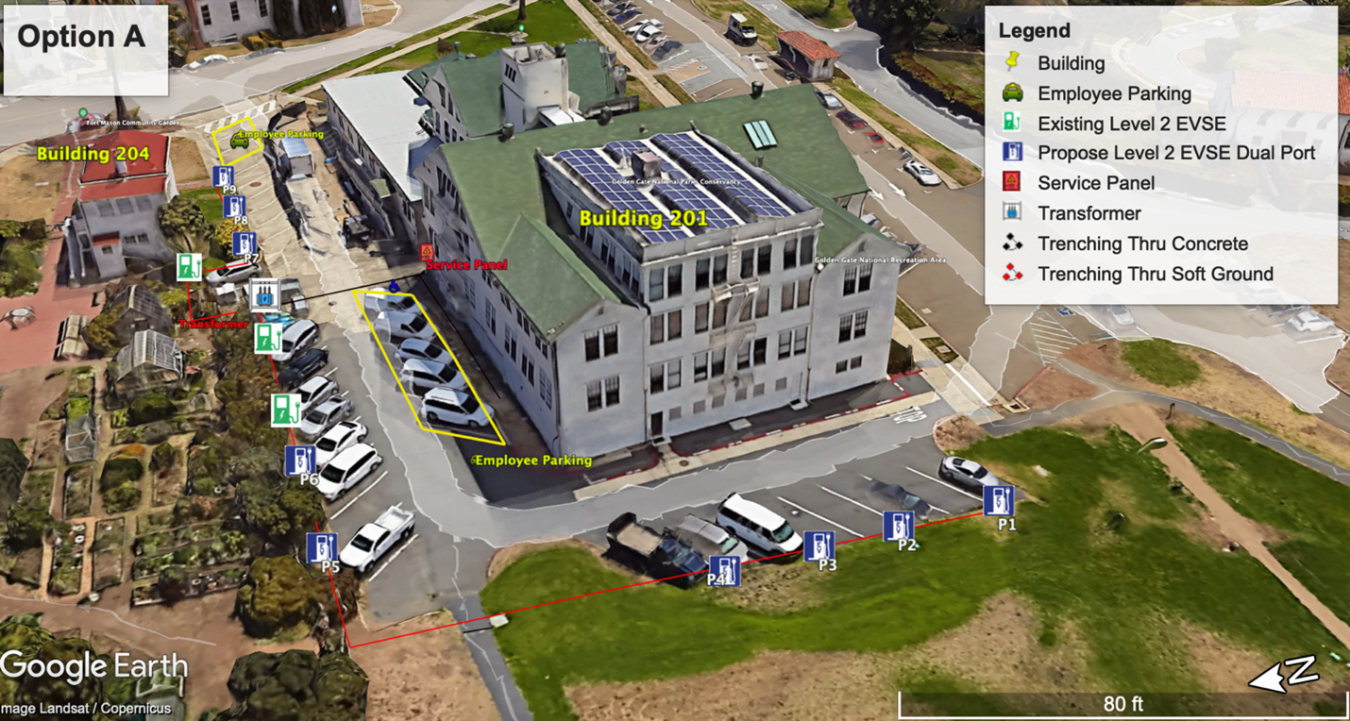 Figure 2. EVSE installation recommendation for the Golden Gate National Recreation Area.
Typically, a best practice is for drivers to have access for parking at ZEV charging stations within about 100 yards of their office entrance. For example, the EVSE installation recommendation for the Golden Gate National Recreation Area is shown in Figure 2.
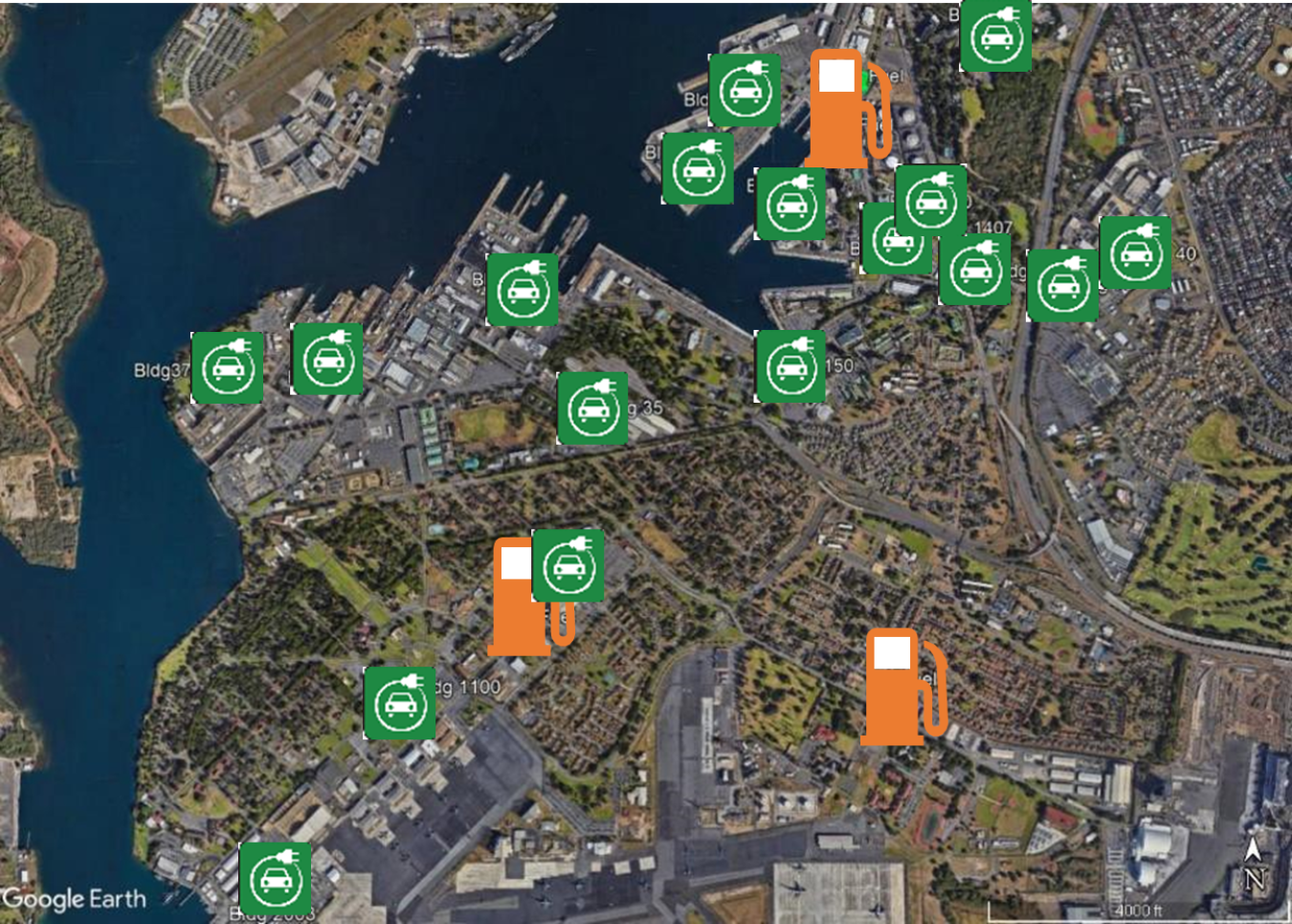 Figure 3. Three centralized gas stations versus 17 distributed EVSE clusters recommended to serve fleet ZEVs at Joint Base Pearl-Harbor Hickam.
This differs from the centralized fueling model previously employed with gasoline vehicles and requires a more distributed deployment of EVSE as opposed to the more centralized installations common with gasoline fueling stations. Figure 3 illustrates the difference between three centralized gasoline stations and 17 distributed EVSE clusters recommended to serve the energy needs of fleet ZEVs at Joint Base Pearl-Harbor Hickam.
Many fleet ZEVs will be charged from EVSE powered by electric infrastructure that currently supports buildings at each site. Therefore, site facility staff and utilities or privatization partners will play a critical role in verifying whether there is sufficient electrical infrastructure to supply electricity to new EVSE and supporting the electrical upgrades and construction projects that may be necessary to support new EVSE. In addition to the facility equipment considerations, facility infrastructure managers may also be interested in fleet EV deployment to understand the increased electricity demand that may result from EVs and better inform their annual energy reporting requirements.
EVSE installations will vary greatly from site to site; some will require a simple project with a wall-mounted EVSE inside a garage, while others will require significant construction and system upgrades. The first step is to identify where you will locate the chargers and how you will mount them. The four basic location types are outlined below.
Location Type EVSE Access Mounting Type Considerations On Street Public Floor Exposed to the elements
Curb/sidewalk alterations may require approval or permits
Outdoor Parking Lot Public
Limited Access
Closed Access
Floor or wall Exposed to the elements
Parking Garage Public
Limited Access
Closed Access
Floor, wall, or ceiling Limited exposure to the elements
Private Garage Public
Limited Access
Closed Access
Floor, wall, or ceiling Limited exposure to the elements
Within the chosen location, you should select the specific parking spaces where you will install the EVSE. Use the siting considerations below to help identify which parking spots are the best options.
Consideration Description Parking Availability Installing EVSE on spaces that are closer to electrical sources (e.g., transformers or load centers) will reduce installation costs (less trenching and power lines). Identify if your EVSE will be drawing power from the grid or an alternative source (i.e., renewables or distributed generation). Impact on Circuit EVSE units can cause a substantial draw on electric circuits. Collaboration between the facility manager and the power utility will help to determine impacts of EVSE on the supplying circuit. Cord Management Cords can be a tripping hazard. Install EVSE such that cords do not cross busy walkways. Installing EVSE at greater heights and using EVSE with cord management technologies (which are available from GSA) will help reduce this risk. Positioning Different EVs have charging ports in different locations. Some vehicles plug in at the front; others plug in at the traditional gas cap location. Review the types of EVs you will need to support, and where they need to be charged when determining where to install chargers. Also, note that some chargers can support multiple vehicles; position them accordingly. Mounting EVSE can be mounted in many different ways (bollard, pole, ceiling, wall). Mount the EVSE to minimize interference with vehicles and pedestrians. Mount the station such that the connector is at a height between 24 inches and 48 inches from the ground (NEC 625.29). Americans with Disabilities Act Considerations When siting EV stations, you may need to provide accessibility for disabled persons. For Americans with Disabilities Act (ADA) routes, a pathway must be maintained to a width of 36 inches. Neither the charging station nor its cord may decrease the width of a pathway to less than 36 inches. Consult your local Authority Having Jurisdiction (AHJ) for more information on ADA considerations. Signage Signage can help redirect EV drivers to the charging station location and inform them of any parking restrictions. If necessary, you may need to install a sign limiting access to EV charging only (rather than normal parking). Area Lighting Install EVSE in well-lit areas, to both reduce the risk of tripping and increase the visibility of the station to drivers. Locations that are more visible are also less likely to be vandalized. Communications EVSE in an underground parking garage may make it more difficult to collect and communicate usage data and availability. Utilization If fleet requirements demand consistent use for the EV throughout the day, it is best to locate the EVSE near the entrance/exit to the parking area. Weather If possible, keep the EVSE sheltered from the elements. Rain, sunlight, and extreme temperatures can slowly have deleterious effects on the EVSE. In locations with significant snowfall, EVSE ports and other openings should not be submerged in snow. Physical Damage Prevention Equipment operating above 50 volts must include features to protect against accidental physical damage (NEC 110.27). Recommend placing the charger out of line of vehicle travel and using protective bollards. If available, the site fleet manager and facility infrastructure manager should work with the facility electrical engineer and/or civil engineer after an initial plan for EVSE quantity and locations has been established. This first conversation should cover the EVSE installation goals from a high level with a preliminary estimate of likely required facility upgrades. Unless the number of ZEV acquisitions has been finalized, it is important to have some flexibility as to the number of EVSE units that will be installed. This is because certain quantities of EVSE may have more economical installation costs than others based on the equipment upgrades that will be required and their resulting new capacity.
The facility infrastructure manager (together with the site location fleet manager and other key stakeholders) should always contact their local electric utility representative early in the EVSE site design process (see Step 9: Coordinate with Local Utility Service). Utilities will play a key role in determining any grid or service upgrades that will be required as part of the new EVSE installations. These will likely be a result of facility equipment upgrades, such as a larger service panel or main breaker, required to support new EVSE, and will be determined by the EVSE installer. It is important to understand whether the installation of new EVSE will require a service upgrade, because that may also impact the rate structures for which the facility is eligible.
Many electric utilities offer incentive programs to reduce the purchase price of EVSE units, while some offer service options that simplify the EVSE installation process. It is critical to understand if there are EVSE incentive programs or EVSE make-ready service options early in the design process. This will help to confirm which programs the fleet is eligible for and if program requirements will influence site design, such as a requirement for pedestal Level 2 EVSE, or that all units must be publicly accessible.
The Utility Finder (U-Finder) tool helps federal agencies identify utility EVSE incentives and contacts in their local ZIP code. The U-Finder includes known EVSE funding incentives and advisory services by customer type (including government), a description of those services, and contact information for the utilities. It also specifies local Clean Cities Coalition representatives that can provide on-the-ground support and identify state incentives.
Consider Managed and Advanced Charging Options
After determining the EVSE needs and determining the placement of the EVSE to best serve the ZEVs at the fleet site location, the site location fleet manager, facility infrastructure manager, and facility energy manager should evaluate if managed charging (such as networked EVSE) and advanced charging options (such as bidirectional charging) are desirable to support building load management and make sense for the specific fleet application.
Fleet locations can implement managed charging options to help optimize vehicle charging and minimize load impacts. Managed charging has the potential to reduce demand charges associated with EVSE, which can significantly increase electricity bills, especially during peak demand.
What is managed charging?
Managed charging involves controlling EVSE charging times or power levels to reduce impacts on facility demand and reduce EVSE deployment needs either through networking EVSE or manually scheduling charging times. Managed charging is effective in locations where vehicles' dwell (or parking) time far exceeds their daily charging needs, providing flexibility in scheduling times when charging occurs (and does not occur).
What are the potential benefits of managed charging?
Managed charging helps fleet locations reduce both operational costs associated with electricity service and capital costs associated with deploying EVSE.
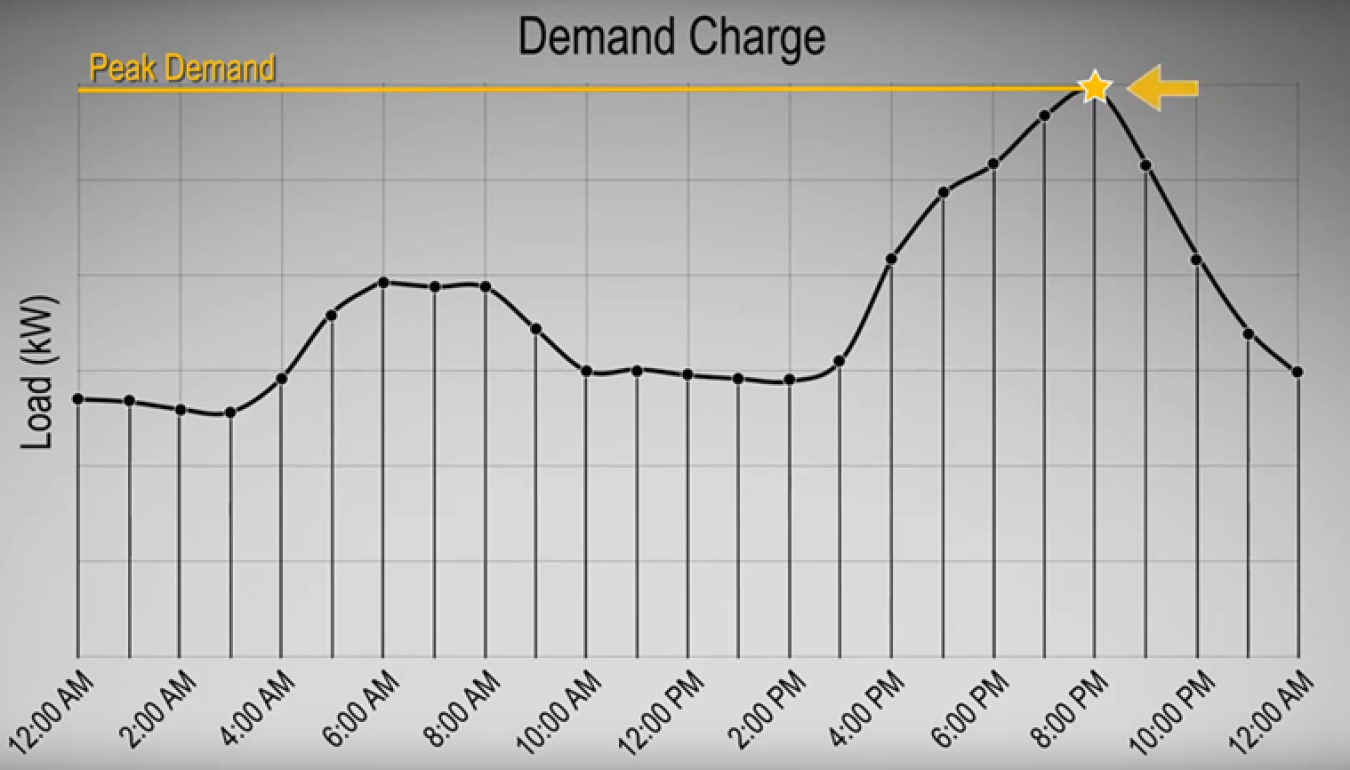 Figure 4. Peak energy demand in a 24-hour period.
Managed charging to reduce electricity costs. Understanding electric rate structures are a critical element to determine the energy costs for charging a ZEV fleet. Most commercial rates include both an energy charge and a demand charge. Demand charges have the potential to significantly increase electricity bills, especially during peak demand. Peak demand typically includes the highest amount of energy consumed in a 15-minute period over the course of a month. Peak demand for a single day is illustrated in Figure 4.
Higher demand charges are typically a result of ZEVs charging when facility loads are coincidentally operating at their highest levels. These coincident peaks will create a higher monthly peak demand and demand charges than before EVSE were installed. However, due to the long dwell periods of most vehicles, these impacts can be easily managed by opting to have ZEV charging occur at times when facility load is lower, which requires coordination between both the facility and fleet managers.
Managed charging to optimize EVSE deployment costs. Each charging station, or EVSE, acquired, installed, and operated adds to fleet costs. Managed charging allows fleets to optimize the scheduling of charging by ZEVs, with the potential to optimize the "ZEV to EVSE ratio", and reduce the number of EVSE required to support the fleet operations.
Managed charging with smart EVSE
Networked EVSE charging solutions (or "smart" EVSE units) can adjust power levels to limit power demand charges from utilities and limit the need for additional infrastructure upgrades. Figure 5 outlines common types of EVSE features, as detailed in the National Laboratory of the Rockies' Electric Vehicle Supply Equipment Tiger Team Site Assessment Findings from Army Facilities report. Certain EVSE can also share power from a single circuit and power two or more EVSE simultaneously.
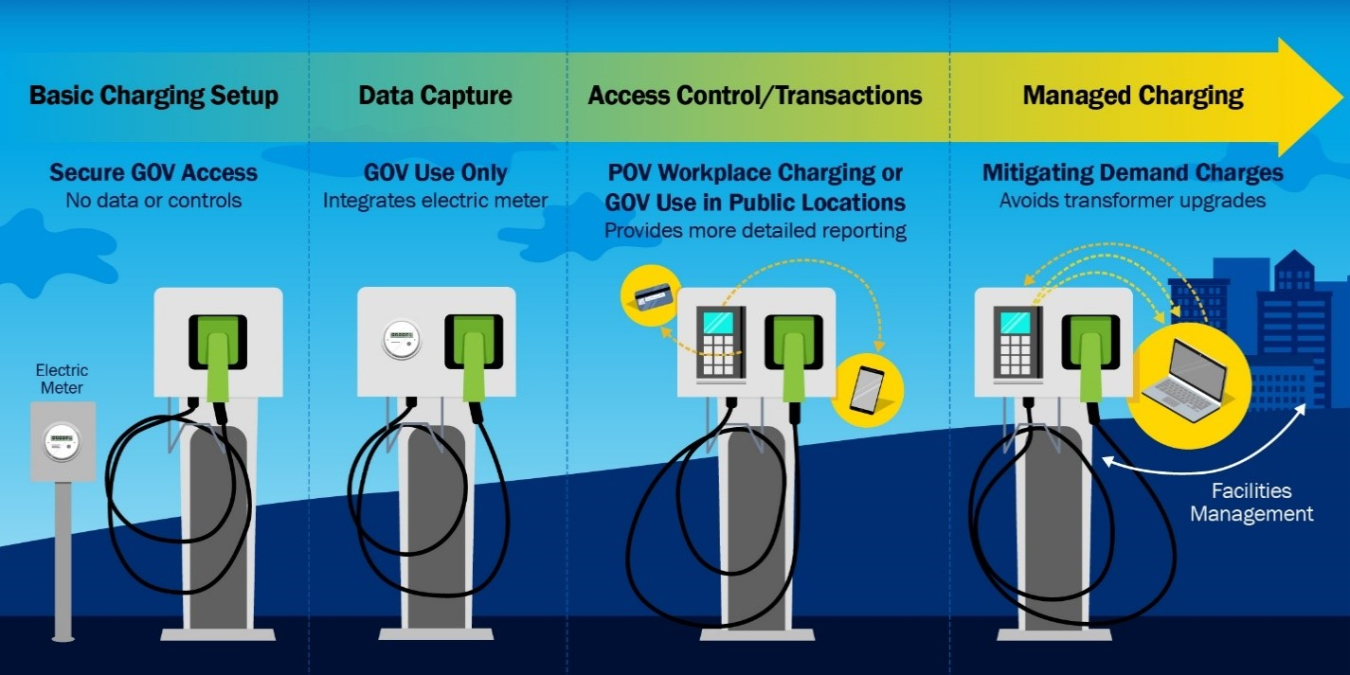 Figure 5. Common types of EVSE features, including a basic charging setup, an EVSE with an integrated electric meter, EVSE with access control and more detailed reporting, and EVSE with managed charging to mitigate demand charges.
ZEV charging can be controlled by a separate controller or in conjunction with smart, solid-state breakers that do not need to be manually reengaged. These solutions can convert the simplest EVSE units into a smart charging solution. Networked EVSE may also aid by reporting energy consumption and billing privately owned vehicles for workplace and visitor charging.
This strategy can reduce the need for service panel replacements or other electrical upgrades and only reduces power to a vehicle when both ports are occupied, to conserve load. With the simplest solutions, fleets can leverage networked sharing features to reduce the service equipment needed for each EVSE by having two to four charging ports share a single circuit, thereby reducing the peak demand across multiple vehicles by providing a lower power level for each charging port.
However, more sophisticated networked EVSE solutions can involve programming or scheduling ZEV charging during certain periods of the day. One solution could include setting a power ceiling for a series of EVSE to mitigate transformer upgrades. Another could include integrating scheduled or programmed charging with facility management systems to shift ZEV charging away from a facility peak.
Although many EVSE are designed to simply provide power to vehicles when they are plugged in, some are designed with more sophisticated features that often require a network connection. Most, if not all, networked EVSE units can set charging times to occur at a certain point in time. This is very useful with time-of-use rates. For example, if electricity costs $0.20/kWh from 6:00 a.m. to 12:00 a.m., and $0.05/kWh from 12:00 a.m. to 6:00 a.m., the EVSE should be set to charge starting at 12:00 a.m. Networked units can also be configured to stagger charging so that they do not set a high peak level. Most utilities charge a demand rate for the most energy consumed in a 15-minute period over the course of a month. To avoid all vehicles charging at the same time, networked chargers can set EVs to start charging at different points in time (e.g., 1/3 of the EVSE units begin charging at 5:00 p.m., 1/3 begin at 10:00 p.m., and 1/3 begin at 3:00 a.m.). Actual optimal timing will depend on other facility loads and fleet needs. Fleet managers should work with facility infrastructure managers to set charging times.
Managed charging through human planning
Managed charging through human planning works with basic EVSE (without data controls) and with networked EVSE. The facility infrastructure manager, facility energy manager, and site location fleet manager can coordinate to schedule vehicle charging during lower time-of-use rates, which can save the site money. Fleet managers should work with facility infrastructure managers to set charging times.
In addition to managed charging benefits, advanced charging options, including bidirectional charging, can allow facilities to manage electrical loads, providing both cost reduction and resilience benefits.
What is bidirectional charging?
Bidirectional charging involves ZEVs and EVSE that support electricity transfer in two directions, from the electrical source to charge the ZEV's battery and from the battery to support other loads at the facility or on the electric grid. Bidirectional charging can deliver energy from the grid to the vehicle's traction battery (charging) or extract energy from the same battery and support building load or grid services (discharging). To support this two-way flow of electricity, both the EVSE and ZEV must have bidirectional capabilities and may require additional electrical equipment to support safe and reliable discharging.
What are the potential benefits of bidirectional charging?
Bidirectional charging can provide two potential benefits: (1) load management to help reduce peak demand charges and (2) mobile storage to provide backup power or support a facility's resilience posture.
Through a vehicle-to-grid (V2G) structure, bidirectional charging can be used for demand cost reduction and/or participation in utility demand response programs. The facility can use excess capacity of the ZEV battery when it is not in use (and not impacting the transportation mission) and send electricity back to the grid to reduce facility peak demand or to generate revenue when rates are high.
Bidirectional vehicles can also provide energy resilience benefits by providing backup power to buildings or specific loads, sometimes as part of a microgrid, through vehicle to building (V2B) charging. Additionally, ZEVs operating in V2B solutions can serve to improve the capabilities of an existing backup power solution, providing increased surety over conventional stand-alone backup generators.
How should fleet locations evaluate bidirectional charging options?
It is critical that the site facility infrastructure manager and facility energy manager, along with the site location fleet manager, assess the potential for bidirectional charging in designing the EVSE. EVSE loads can create significant demand charges during peak facility usage periods. Bidirectional charging can help ensure that EVSE is not only not adding to peak demand, but by reversing the electricity flow back to the grid, can both reduce that peak demand and generate revenue.
Bidirectional charging is still in its infancy. Not only is bidirectional charging limited to only some ZEVs (e.g., the Nissan Leaf and Ford F150 Lightning) and some EVSE, but also utilities and electric systems must also support the capabilities. Once the opportunity for bidirectional charging is determined, the stakeholders should evaluate the impacts of potential EVSE on the facility load, as well as the opportunities for supporting resilience and arbitrage. Working with the utility service is an important part of this evaluation. If the potential returns outweigh the investment, the facility may consider, possibly together with the utility service, implementing a bidirectional charging system. More information is available at FEMP's Bidirectional Charging and Electric Vehicles for Mobile Storage web page.
Refine EVSE Cost Estimates
The final phase of designing EVSE is developing EVSE deployment cost estimates based on the ESVE designs, and refining and prioritizing those designs based on available funding sources. The primary responsibility for completing and refining EVSE cost estimates is with the agency headquarters fleet manager, site location fleet manager, and facility infrastructure manager, with additional input from the facility energy manager for the cost impacts on electricity service.
Fleet and facility managers should identify opportunities to reduce the costs of deploying EVSE where possible, assessing and balancing any cost savings against the ability to support the transportation mission. The cost of deploying EVSE can be broken down into three main categories—acquisition costs, installation costs, and maintenance and support costs—which are detailed in the accordion sections that follow.
FEMP developed EVI-LOCATE (Electric Vehicle Infrastructure Locally Optimized Charging Assessment Tool and Estimator), a virtual site assessment tool to help federal fleets generate EVSE site designs and cost estimates. The EVI-LOCATE tool uses EVSE design criteria, interactive Geographic Information System (GIS) analysis of the site, electrical infrastructure, and individual component-level costs that are used to calculate site-specific EVSE cost estimates. Examples of cost components include electrical equipment (e.g., circuit breakers and service panels), conduit, conductors, bollards, signage, installation (including trenching and overhead), networking, warranty, site validation, activation, and permit costs.
The costs for purchasing EVSE depend on the charging level, networking or communication abilities, and mounting type. Reducing the EVSE power level, eliminating the need for networking and data management, and using EVSE with multiple ports can reduce the acquisition costs for EVSE.
Costs for installing EVSE, in many cases, are the most expensive component of deploying ZEV charging stations. Carefully selecting where to site chargers can dramatically reduce costs. Siting EVSE near existing electrical circuits can reduce trenching and wiring costs. Using existing electrical circuits with sufficient capacity without upgrading can further reduce costs. Agencies can also save costs on future installation by adopting policies that require sufficient electrical infrastructure for EVSE to be installed in any new parking lot or new developments at government facilities.
By proactively planning for future charging demand by fleet and employee vehicles, agencies can avoid more costly retrofitting for such infrastructure at a later date. If, however, EVSE will be installed on existing parking infrastructure, then agencies should consider installing more electrical infrastructure than is needed to supply the current project in consideration. Again, by proactively planning for potential future demand, agencies can save future costs by doing any additional trenching, wiring, etc. ahead of time to support a larger amount of EVSE than will initially be installed.
It is important to note that if funding options other than appropriations are used (e.g., UESC, utility partnerships, ESPC, etc.), site assessment and design costs are the responsibility of the contractor. In those instances, EVSE installation costs may be bundled with other energy conservation measures (ECMs).
Costs for maintaining and supporting installed EVSE include ongoing costs for networked stations, data management, and maintenance charges that include addressing software glitches, replacing exhausted or broken parts, and repairs associated with accidents or normal wear. Factors influencing this cost are charger location, number of chargers, charger usage, network requirements, and preservation of the charging equipment from weather and temperature extremes. Many chargers offer extended warranties that can reduce maintenance costs.
Using these three components, agency fleet managers should evaluate opportunities to refine EVSE deployment cost estimates while continuing to support fleet ZEV needs at the site location. The agency fleet manager should finalize cost estimates for the acquisition, installation, and maintenance of EVSE based on the models selected and the locations chosen. Using these estimates, the agency fleet manager should ensure there are available capital and operating funds to support deployment of EVs, and that these funds do not negatively impact the ability to manage the fleet effectively.

As part of the Charging Ready component of the ZEV Ready certification, the site ZEV champion should lead a team that includes the site location fleet manager, facility infrastructure manager, and facility energy manager to design EVSE to support ZEVs at the fleet location. This team should work collaboratively together to determine EVSE needs and complete a EVSE site assessment at the fleet location to support the high-level ZEV and EVSE opportunities identified using the ZPAC tool in Step 5: Identify ZEV Opportunities.
| PHASE | ZEV READY | STEP | ACTIONS |
|---|---|---|---|
| DESIGN |
| 10. Complete Site Assessment and Design EVSE | ✔ The site ZEV champion, site location fleet manager, facility infrastructure manager, and facility energy manager should perform an assessment of existing parking logistics and electrical infrastructure at the fleet location to evaluate near-term and medium-term (1-5 years out) EVSE needs. This will result in an initial plan for EVSE installation by unit type (e.g., Level 1, Level 2, and/or DC fast charging), quantity, and location to support near-term to medium-term (1-5 year) goals and needs. It will include cost and load estimates for infrastructure and electricity upgrades (for example, transformers, etc.) needed to support the increased loads for ZEV charging in the medium-to-longer term. ✔ The site ZEV champion, site location fleet manager, facility infrastructure manager, and facility energy manager will coordinate EVSE deployment phasing with vehicle acquisition phasing and integrate site infrastructure deployment plans with other long-range agency infrastructure and master planning efforts. ✔ The site ZEV champion and key fleet stakeholders should evaluate opportunities to leverage fleet charging with workplace, visitor, and other co-located charging opportunities. |

Previous Step
Go back to Step 9: Coordinate with Local Utility Service.
Return to the ZEV Ready Center
Review the Federal Fleet ZEV Ready Center landing page and all 15 steps.