




Geothermal wells 500 feet below the Louisville Muhammad Ali International Airport’s airfield, marked in orange, support a system that heats and cools the Jerry E. Abramson Terminal and is anticipated to save $400,000 in energy costs each year. Photo from Kentuckiana Aerial Photography
Fast Facts
Location: Louisville, Kentucky
Size:
- 648 boreholes drilled 500 feet deep in a 9-acre borefield
- 82 geothermal heat pumps (GHPs)
- GHP system conditions a 412,766-square-foot terminal
Unique Features:
- All GHPs in system have dedicated outside air units with heat recovery and water-side economizers to maximize system efficiency with precooled air
- Priority GHPs designed as “twinned” units to increase system resilience
- Six pipe geothermal heat recovery chiller integrated into system to increase system efficiency and resilience
- Rejected heat from security scanning equipment is recovered and used to augment heating during the cold months
An Innovative Renovation
When officials at Louisville Muhammad Ali International Airport (SDF) began planning the airport’s latest capital improvement program in 2018, they knew upgrading heating and cooling at the Jerry E. Abramson Terminal was a must.
The terminal’s outdated, centralized system of large cooling towers and boilers was a problem. A single component failure could take months to repair because of obsolete parts, and travelers consistently filed temperature complaints.
Sticking with traditional heating and cooling didn’t make sense. The airport’s capital improvement program, with $1 billion in total investment, was always meant to do more than update existing systems. Airport management aimed to incorporate innovative technologies that would improve systems and offer customers a best-in-class experience. After researching options, they decided to install geothermal heat pumps.
A Feature-Packed System
The airport’s closed-loop geothermal heat pump system is thoughtfully designed and loaded with features intended to make it more efficient and resilient.
The system, one of the largest geothermal projects at a U.S. airport, includes 648 geothermal wells drilled 500 feet deep and 82 geothermal heat pumps to heat and cool the 412,766-square-foot terminal building. Special features include underground geothermal vaults with digital monitoring and a modular, six-pipe geothermal heat recovery chiller.
The new design converted the old, centralized system of air handling units to a distributed system of geothermal heat pumps to reduce fan energy, enable better zone control, and maximize recovery between heating and cooling loads. This distributed layout freed up much-needed space and made it easy for staff to access and maintain equipment.
Some of the geothermal heat pumps are strategically twinned—able to operate as one and take over for each other—to increase their operational range, ensure consistent operation, and ease maintenance. Each heat pump is tied to an outside air unit with heat recovery to provide healthy, comfortable air for travelers and staff.
Careful Construction Plans Provide Nonstop Service
After installers drilled the first borehole in 2021, it took just over three years to build out the system enough to be able to fully convert from traditional heating and cooling to geothermal.
Thanks to intricate planning and phasing, the conversion—and accompanying architectural renovations including new ceilings, flooring, architectural lighting, and wayfinding and digital signage systems—took place with zero interruptions to airport operations, including security screening, airline service, and airport tenants.
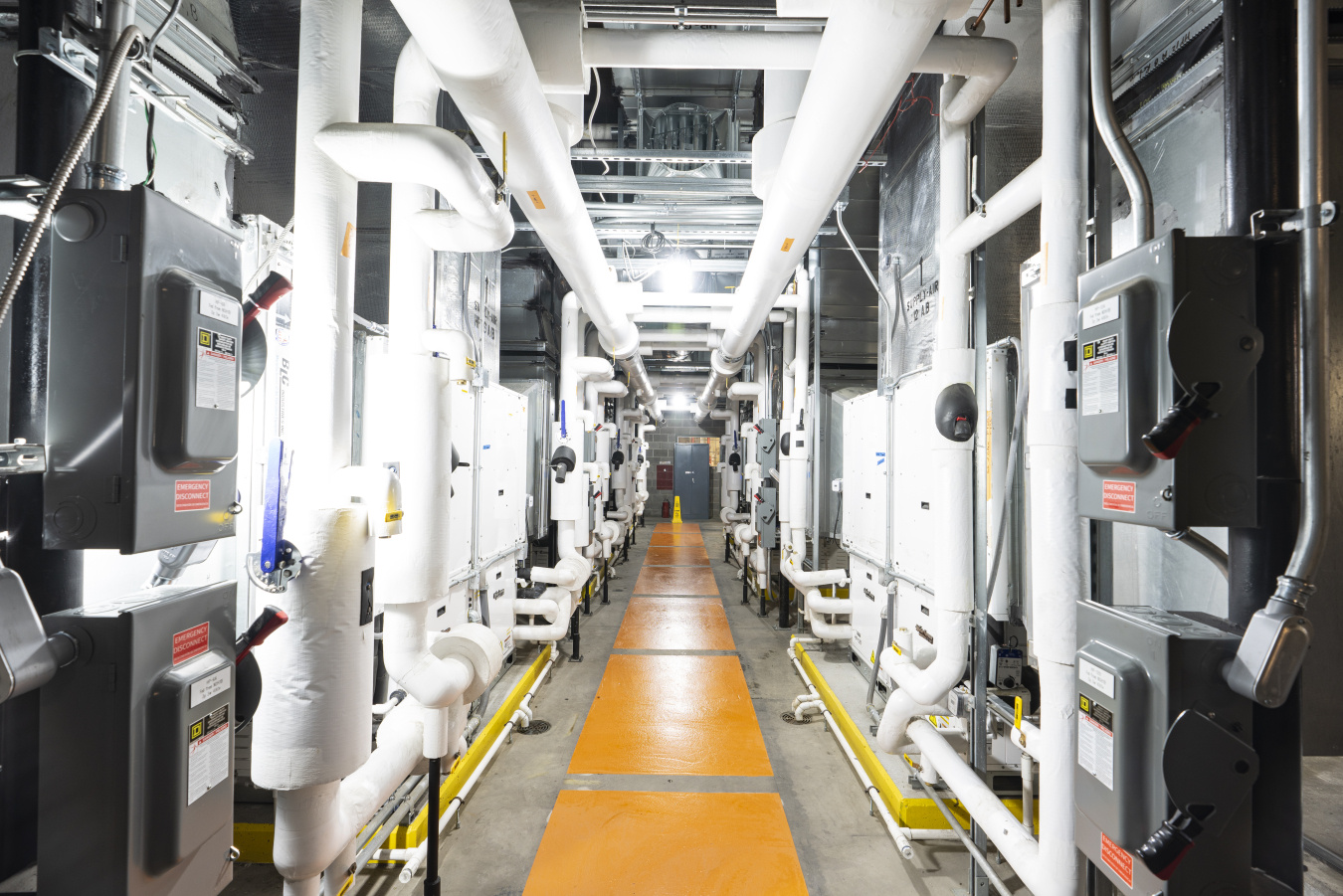
"Heat pump alley" located in the airport main central utility plant. All units shown have waterside economizers and are "twinned" to increase both system efficiency and resilience. Photo from CMTA Inc.
Energy Savings:
- Anticipated to use 40% less energy than traditional heating and cooling
Cost Savings:
- Anticipated to save $400,000 in annual operating costs versus traditional HVAC, plus additional savings through reduced maintenance needs over time
- Underground heat rejection equipment expected to last 2–3 times longer than aboveground equipment
Supplemental Funding Source: - $10.6 million Federal Aviation Administration Voluntary Airport Low Emissions grant
Clever Design Increases Savings and Resilience
The conversion to geothermal heat pumps and the corresponding mechanical, electrical, and plumbing system upgrades cost about $22 million. A $10.6 million Voluntary Airport Low Emissions grant from the Federal Aviation Administration helped support the project.
Adding water-side economizers—which reduce demands on heat pump operation by precooling system return air—to all heat pumps allowed the airport to reuse some existing chilled water distribution pipes for geothermal distribution. This shaved around $3 million and about two years of installation work off the conversion project. The water-side economizers also increase system efficiency by tying critical units into the new geothermal heat recovery chiller installed as part of the project. This approach allows the system to utilize the most efficient form of cooling available and provides an alternative source of cooling in the unexpected occurrence of a heat pump failure.
The geothermal system is built to last, including an underground heat exchange system with an anticipated lifespan two to three times longer than aboveground equipment.
The project is expected to reduce terminal energy use by 40% and utility costs by about $400,000 per year. In-house staff can handle all of the new system’s preventative and repair maintenance, which will eliminate significant operational costs.
A Strong System Built for Tomorrow
The system was designed to be resilient and ready for future growth. The system’s small footprint allows room to grow, while the geothermal wells include about 20% excess capacity to ensure redundancy and allow for expansion.
Airport management also paved the surface of the geothermal borefield and vaults to allow for airfield improvements, including additional terminal ramp space, room to park charters during the Kentucky Derby, and a 100,000-square-foot area for future terminal expansion.
“Just as we had hoped, the geothermal project uses innovative technology to give customers comfortable air while saving the airport money. Most of all, it serves as a leading example for others in our industry.”
Louisville Muhammad Ali International Airport

Contact
For any website technical issues or general questions about geothermal heat pumps, contact DOE.Geothermal@ee.doe.gov.
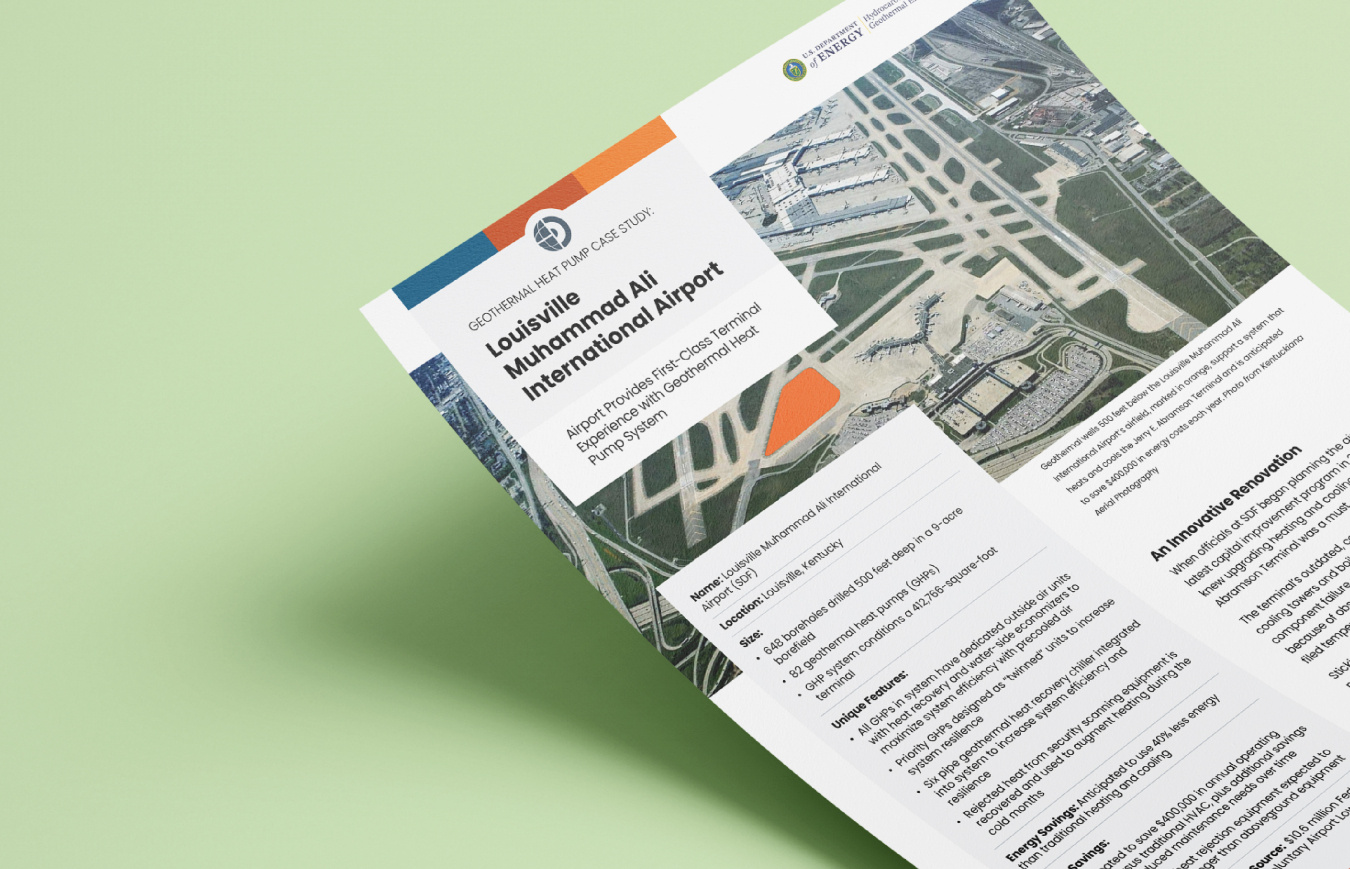
Printable Version
Download the printable Louisville Airport case study or visit the Geothermal Heat Pump Case Studies page to see more examples of geothermal heat pumps in action.