



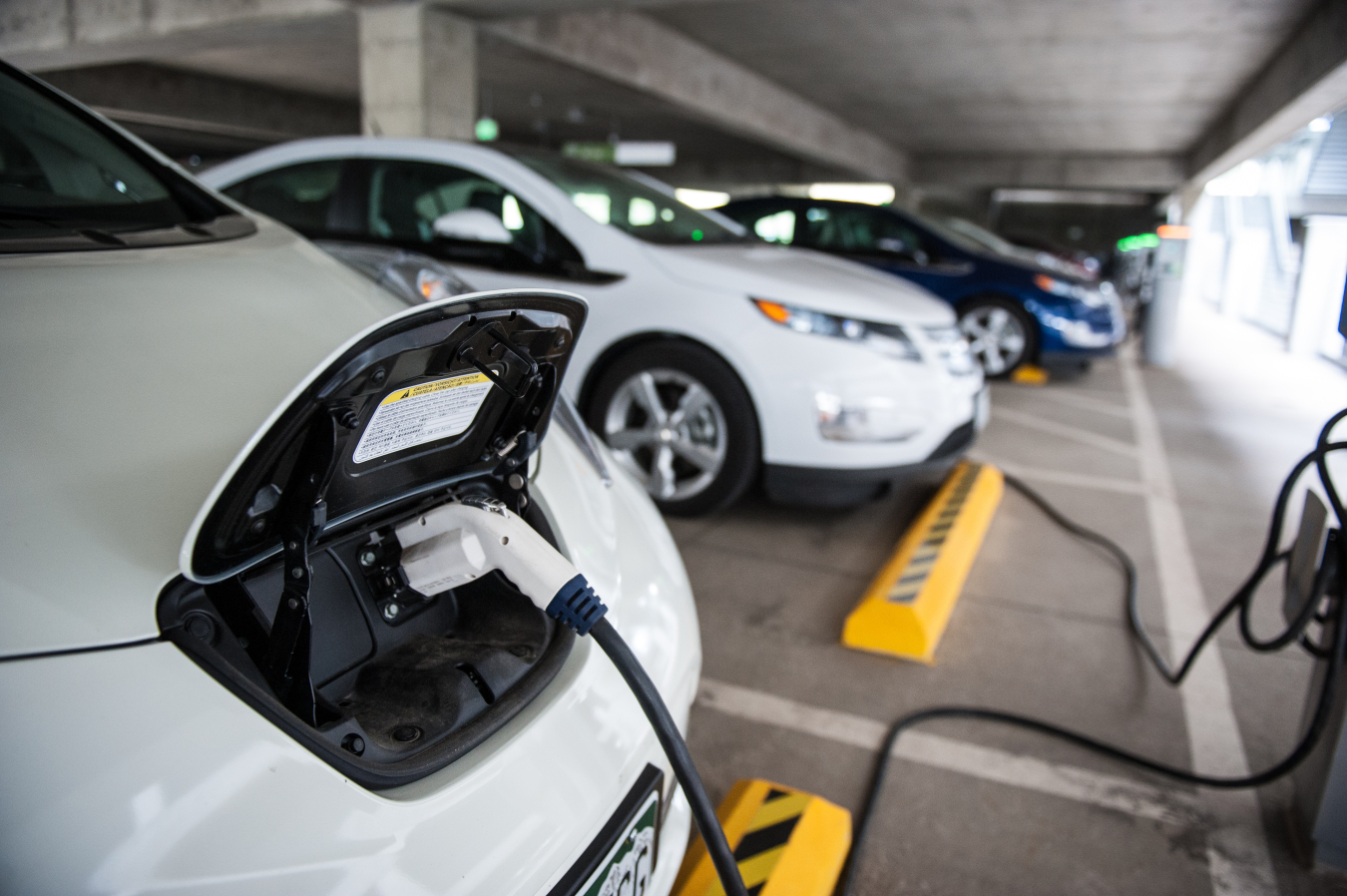
With their potential for decreasing transportation costs, plug-in electric vehicles (PEVs)—including plug-in hybrid electric and all-electric vehicles—are a growing choice for consumers and businesses. The Alternative Fuels Data Center provides information on using electricity as a vehicle fuel, while the Tax Credits and Other Incentives page has sortable lists of federal, state, and utility incentives. The Transportation Technologies Office (TTO) supports a variety of work to lower the cost and increase the convenience of PEVs.
The majority of PEVs’ fuel savings and additional cost come from batteries and electric drive systems. TTO is collaborating with national laboratories and industry to improve these by:
- Reducing the cost, volume, and weight of batteries by developing cell and modules, improving lithium-ion electrochemistries, and investigating new materials
- Improving electric traction drive systems by reducing the cost, decreasing the weight and volume, improving the performance, and increasing the efficiency of power electronics and electric motors.
While these systems are unique to electric drive vehicles, a number of other technologies can also be used in PEVs to reduce cost and improve all-electric range, including lightweight materials, advanced combustion engines (for plug-in hybrid electrics), and advanced lubricants. Improving the materials used in electric drive systems can also increase their performance and efficiency. To maximize these technologies’ effectiveness, researchers use simulation and modeling software to create “virtual vehicles” based on data collected from vehicles on the road and in the laboratory. TTO selects research and development projects through a competitive solicitation process and offers funding opportunities throughout the year.
TTO is also working with national laboratories and key stakeholders to advance the development and use of PEV charging infrastructure. Three broad principles guide TTO efforts in this area and are intended to support communities, companies, and other stakeholders as they plan for future PEV charging availability.
All of this work, spanning R&D, analysis, and technical information resources not only leverages the unique capabilities and deep technical expertise of our national laboratories, but also involves close coordination with other Federal agencies, including the U.S. Department of Transportation, state and local governments, industry partners, and other key stakeholders to serve current and future PEV drivers across America.
For example, community and fleet readiness activities connect local governments and private fleets with our nearly 100 Clean Cities coalitions around the country. The PEV Readiness Scorecard helps communities assess how prepared they are for PEV drivers, while a number of cities are already finding ways to improve planning, increase training, and cut red tape through PEV community readiness projects.
Also, TTO is partnering with a number of organizations and companies to train our workforce to develop, build, repair, and respond to incidents with these vehicles. TTO has sponsored student competitions in advanced vehicles for more than 25 years, with the latest focusing on transforming a conventional Chevrolet Camaro into a PEV without compromising performance, safety, or consumer acceptability.