



--This project is inactive --
San Diego State University (SDSU), under the 2012 SunShot Concentrating Solar Power (CSP) R&D funding opportunity announcement (FOA), is demonstrating a new receiver design that uses air as the heat-transfer fluid. The university's innovative small-particle heat-exchange receiver (SPHER) uses carbon particles to enhance performance and achieve higher thermal efficiency.
Approach
The SDSU research team is working to design, construct, and test a revolutionary, high-temperature solar receiver in the multi-megawatt range that can drive a gas turbine to generate low-cost electricity. The goals of this project are to:
- Validate the SPHER concept by demonstrating for the first time a pressurized solar receiver with a window greater than 1 meter in diameter
- Produce a reliable, low-cost, high-efficiency, high-temperature receiver approaching the 5-megawatt scale capable of powering a gas turbine for electricity production
- Prove the capability of the receiver to generate pressurized, high-temperature air at high efficiencies via prototype testing at the National Solar Thermal Test Facility at Sandia National Laboratories.
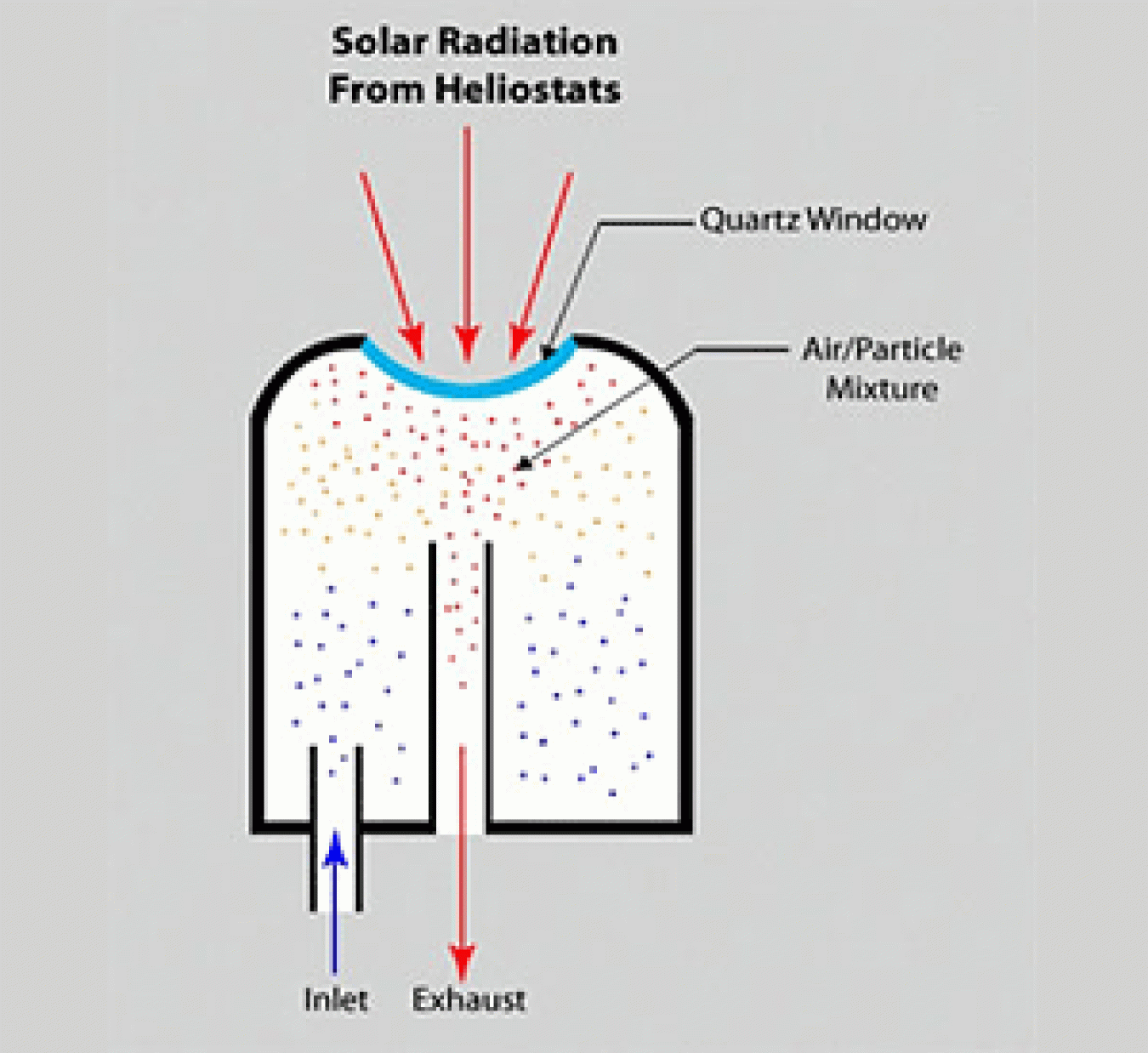
Concentrated radiation from the heliostat field is absorbed directly in a gas-particle suspension rather than on the receiver walls. The carbon nanoparticles oxidize as they transit the receiver, resulting in clear gas stream exiting toward the turbine.
Innovation
The concept of a volumetric, selective, and continually replenishable absorber is entirely unique. SPHER uses a dilute suspension of carbon nanoparticles dispersed in air to absorb highly concentrated solar flux volumetrically inside a windowed pressure vessel—rather than on a solid surface as in most other receivers. The small-sized particles rapidly transfer heat to the surrounding air and then oxidize as temperatures increase. A hot, pressurized, clear gas stream consisting almost entirely of air with a small amount of CO2 is then available to drive a gas turbine or be used for a process. This system can readily be hybridized with natural-gas plants.
The SunShot CSP R&D program seeks to accelerate progress toward the cost target of $0.06 per kilowatt-hour through novel and revolutionary research into CSP technologies. Learn about other concentrating solar power research.