



The Department of Energy (DOE) Office of Critical Minerals and Energy Innovation’s Alternative Fuels and Feedstocks Office, formerly known as the Bioenergy Technologies Office, Feedstock Technologies Research and Development (R&D) focuses on technologies and processes that transform reusable carbon sources into conversion-ready feedstocks.
R&D to transform reusable carbon and waste resources into feedstocks for conversion to biofuels, bioproducts, and biopower will expand biomass resource potential in the United States.
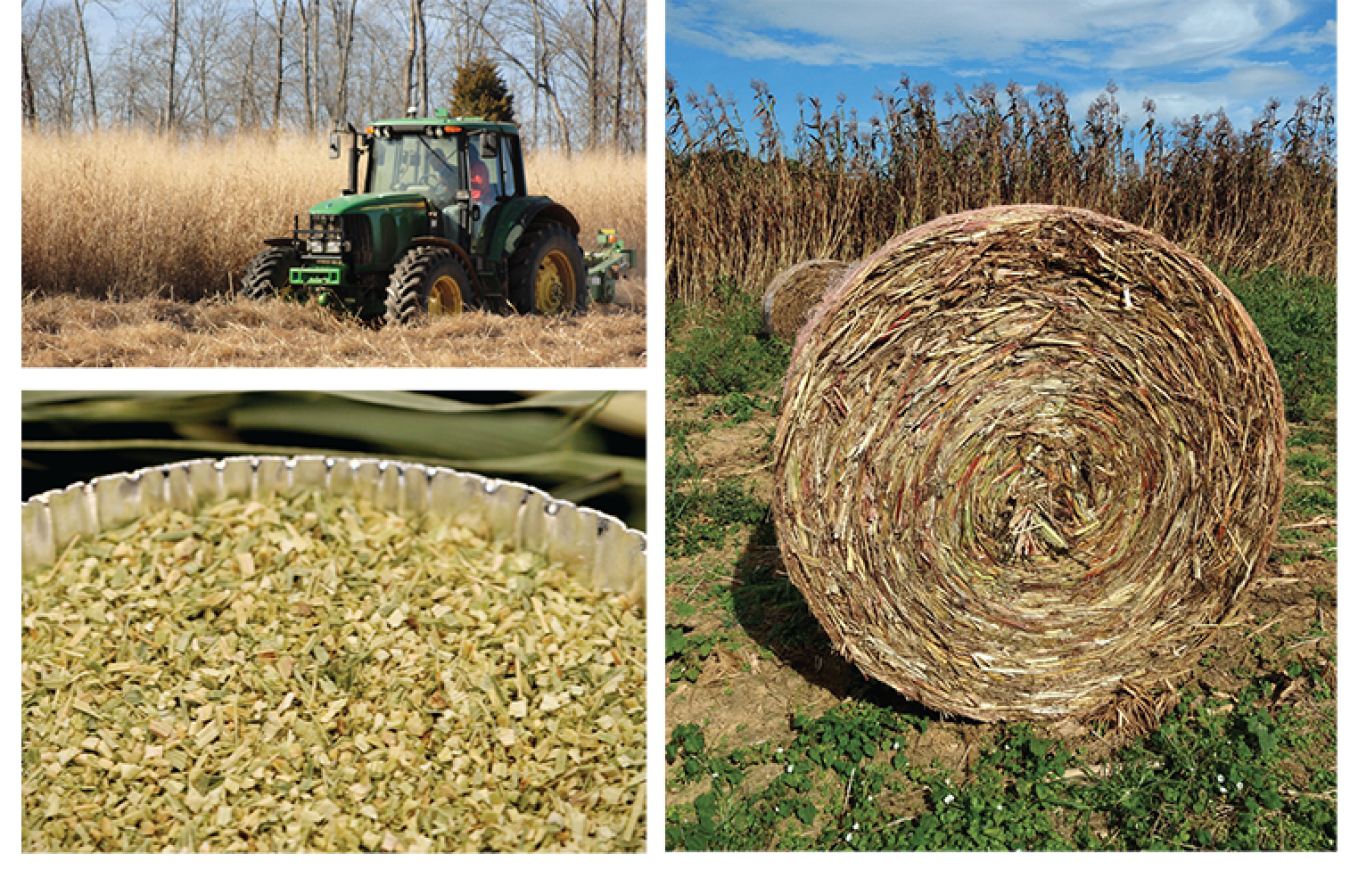
Feedstock Technologies R&D focuses on improving methods to convert carbon and waste resources into conversion-ready feedstocks. Top left: Switchgrass harvest. Top right: Switchgrass, baled. Bottom left: Chopped and ground switchgrass.
Biomass Feedstocks as a Carbon Source
Terrestrial lignocellulosic biomass (i.e., plants and plant-based materials not used for food or feed) is an abundant and resource for producing biofuels, bioproducts, and biopower.
Biomass and other reusable carbon sources commonly used for bioenergy applications include:
- Agricultural residues (e.g., corn stover)
- Algae
- Dedicated energy crops (e.g., switchgrass, miscanthus, energy cane, sweet sorghum, high biomass sorghum, hybrid poplars, and shrub willows)
- Forestry residues (e.g., logging residues and forest thinning)
- Waste streams and reusable carbon sources (e.g., the non-recyclable organic portion of municipal solid waste, biosolids, sludges, waste food, plastics, CO2, industrial waste gases, and manure slurries).
Feedstock R&D Activities
Feedstock R&D develops science-based strategies and technologies to reduce the cost, improve the quality, and increase the quantity of reusable carbon-based feedstocks.
Each R&D area is composed of activities which help improve the efficiency and reliability of feedstocks for conversion into biofuels, bioproducts, and bioenergy. These include:
- Resource mobilization
- Supply chain analysis
- Harvest and collection
- Storage
- Transport and handling
- Preprocessing and quality improvement
- Supply system integration.
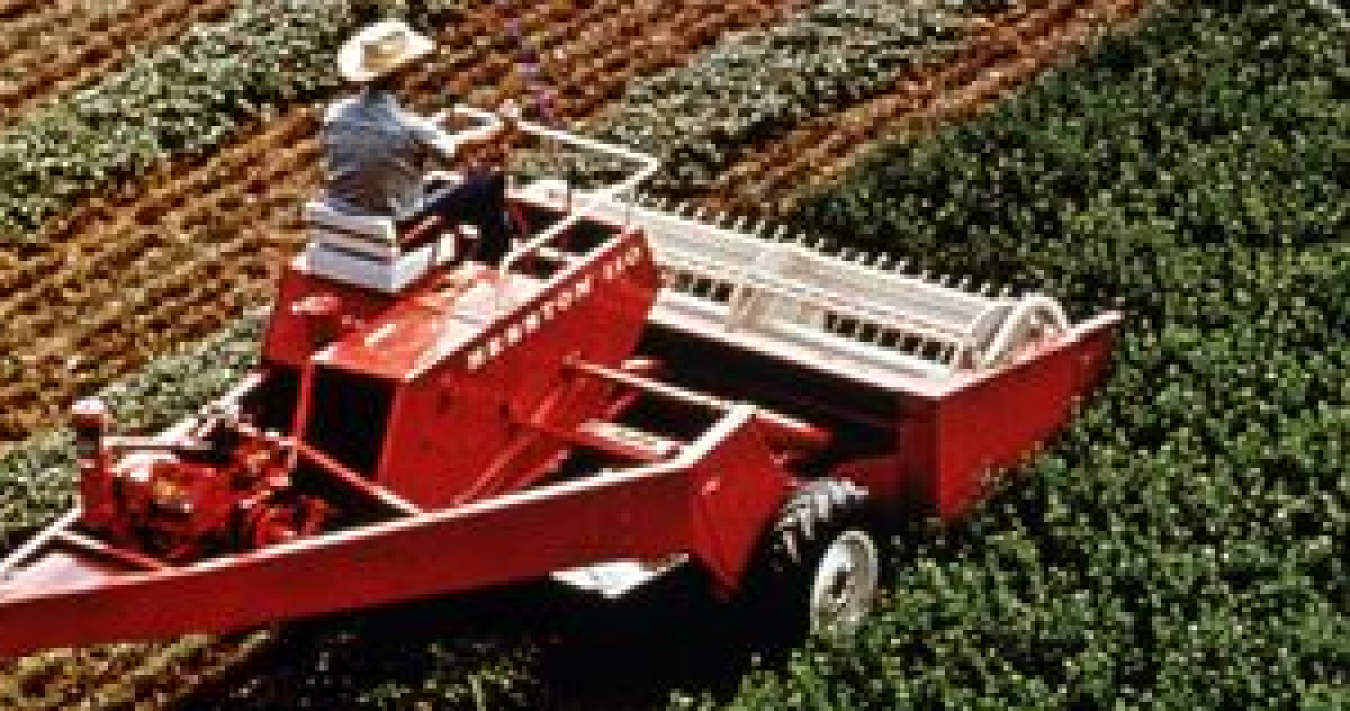
The Feedstock Supply activity supports the development of cost-effective strategies, technologies, and systems to harvest and deliver volumes of biomass feedstock at the quality needed by biorefineries.
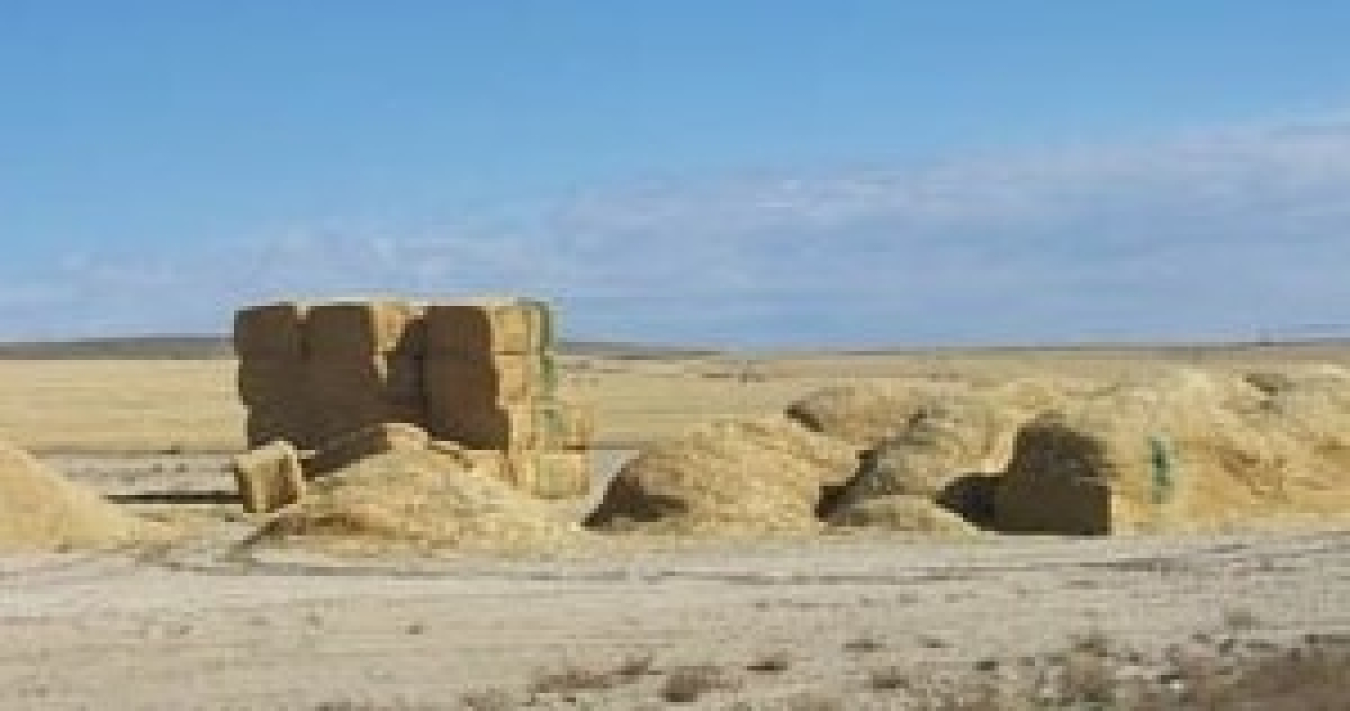
Feedstock Logistics activities involve the operations needed to harvest or collect a reusable carbon source, such as biomass, and move it to the biorefinery, while ensuring that it is conversion-ready.
Feedstock-Conversion Interface R&D
R&D activities that are focused on the interface of feedstock supply systems and feedstock conversion are coordinated through R&D activities that are focused on the interface of feedstock supply systems and feedstock conversion are coordinated through the Feedstock-Conversion Interface Consortium (FCIC).
The Feedstock-Conversion Interface Consortium (FCIC) is an integrated and collaborative network of nine national laboratories dedicated to addressing technical risks and understanding how biomass properties influence collection, storage, handling, preprocessing, and conversion technologies with the goal of improving the overall operational reliability of integrated pioneer biorefineries.