



| Location | Fort Collins, Colorado |
|---|---|
| System Type | Photovoltaic (PV) |
| System Size | 37 kW |
| Installation Cost | ~$125,000 |
| Project Completion | 2021 |
| Project Savings | ~51 MWh/year, ~$150,000 over the project life |
| Load Service Area | USDA ARS Research Farm |
| Project Champions | Sandy Morgan and Travis Vagher |
| FEMP Assistance | Feasibility study, design development, design review, request for proposal development, and contract award |
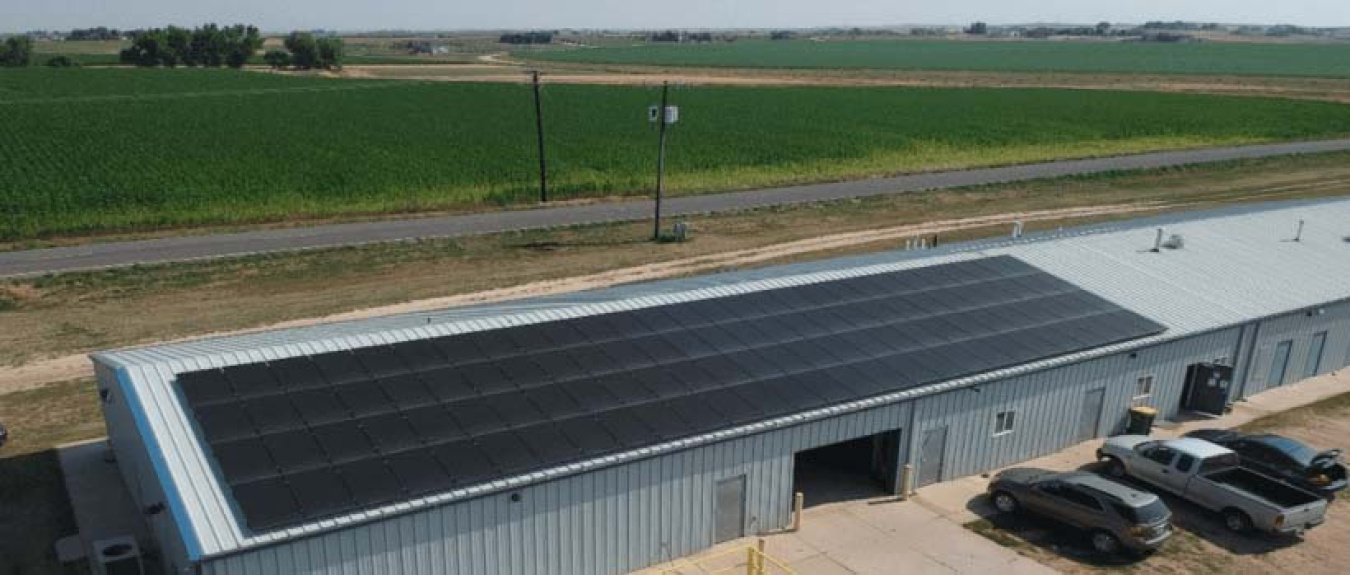
The U.S. Department of Agriculture (USDA) Agricultural Research Service (ARS) Research Farm in Fort Collins, Colorado, conducts research and development on sugarbeet germplasm to support industry and university breeding efforts. The farm's 37-kilowatt (kW) solar photovoltaic (PV) system will provide 100% of the site's electricity, making it the third USDA ARS site to achieve independent electricity generation.
Though small, this project has a number of additional considerations for the future with low- or no-cost measures and demand management savings.
Planning and Implementation
Fort Collins managers sought to install on-site generation at their five sites in the region. Due to various factors including space limitations, net metering, and interconnections requirements, the Fort Collins research farm site was chosen for a project given an ideal array location and need for resilient power and an electric vehicle (EV) charger.
Appropriations was the chosen means to procure the PV array at the farm site due to small system size. The corrugated metal roof was an ideal location for a small array that could reach the Fort Collins managers' objectives of achieving independent energy generation for the site.
The Federal Energy Management Program (FEMP) team supported the USDA ARS managers through the process of establishing project goals, evaluating sites and applicable net metering programs, developing solicitation documents, and participating in submittal reviews and construction meetings.
Key Lesson Learned: With detailed planning, appropriations can achieve comprehensive benefits.
Establish Project Objectives
Establishing clear project objectives (e.g., savings, backup power needs, fleet electrification) keeps teams focused on achieving the goals. Project goals established at the beginning of a project must be carried forward into the solicitation phase and then into the contract. Make sure objectives are part of the selection criteria and included in the design submittal review phase.
"Future Proof" Your Photovoltaic Array
Site managers sought to meet their consumption with on-site generation and considered energy management goals in order to size the PV system.
Helpful Tip: Some utilities may limit PV sizing to 100% of historical use, however there might be a solar system sizing worksheet that allows submitting future additional load (e.g., EVs).
Using the worksheet allows you to add projected loads and increase the sizing of solar PV system shown on the interconnection application.
Size your solar array for the future by considering the following:
EV Charging
Consider the future need for vehicles and equipment that are likely to become electrified such as forklifts and even tractors. Projecting the quantity of vehicles and charge levels (kW) and intervals will be key to estimating the amount (kWh) of electricity needed and thus the optimal sizing of a PV system. Another important consideration includes chargers for employee and visitor parking stalls. As with fleet vehicles, estimate the usage (kWh) using employee commute data and estimates of visitor needs.
See FEMP's Federal Workplace Program Charging Guide for planning considerations.
Heating and Cooling Loads
The electrification of heating and cooling loads was also taken into account for PV system sizing. Site managers are planning to replace the gas furnace soon and will do so with a heat pump.
Critical Loads
Identify critical loads (e.g., research facilities, telecommunications) that require backup power. This site was identified as a critical load and an ideal candidate for a battery energy storage system (BESS); however, the project budget could not accommodate PV and storage. The site chose to make the PV project "battery ready" by selecting an inverter that could intertie with a battery in the future.
The inverter equipment installed will allow for a future installation of a battery energy storage system (BESS), which could reduce energy demand costs and potentially provide backup power in the event of grid outages. The system's contractor used PV modules that were Buy American Act compliant and tested for quality and safety by a nationally recognized testing laboratory.
See FEMP's Solar PV Technical Specifications tool to learn more about making a PV system "Battery Ready."