



The program has placed fellows with 120 host institutions across 49 states and territories since 2017.

Secretary of Energy Chris Wright today announced that the U.S. Department of Energy will not move forward with designating the three proposed National Interest Electric Transmission Corridors previously selected in December 2024 to advance in the review process.
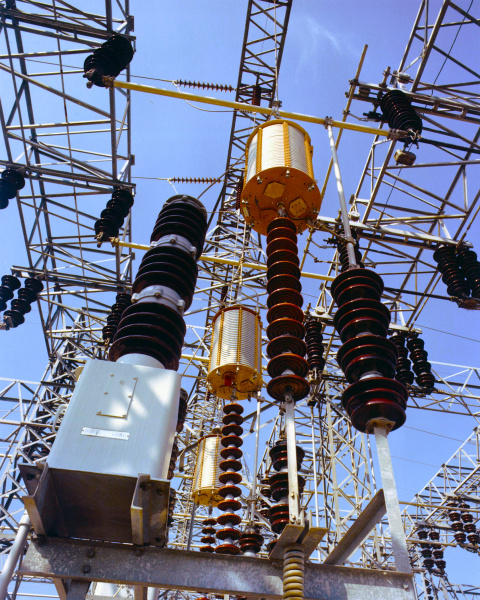
The Department of Energy’s Office of Electricity (OE) leads efforts to catalyze onshore production and availability of critical grid components to reduce reliance on foreign suppliers as outlined in OE’s Strategic Plan.
Test Facility Providers and Innovators Team Up to Test Next-Generation Grid Technologies
The U.S. Department of Energy’s Office of Electricity (OE) is working to develop technical solutions, issue best practices, and strengthen coordination among utilities, national labs, and government agencies to prevent grid-related wildfire ignitions.
The U.S. Department of Energy’s Office of Electricity (OE) launched the Storage Design Strategies to Ease Production (STEP) Prize, a new competition to help the next generation of energy storage technologies move more smoothly from concept to real-world manufacturing.
DOE report shows pressing need for more electric transmission infrastructure to power a reliable and secure grid.
OE launched the Storage Design Strategies to Ease Production (STEP) Prize, a $500k competition to accelerate next-gen energy storage technologies by addressing manufacturing and supply chain challenges early in the design process.
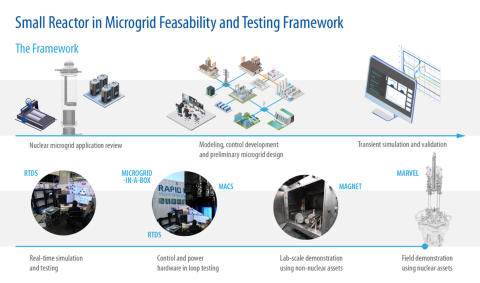
Mission-critical commercial and military applications have extremely high uptime requirements and tight deployment space constraints. Advanced small nuclear reactors, packaged as compact units and deployed in microgrids, present a tantalizing option to meet these constraints and advance many of our nation’s priorities.
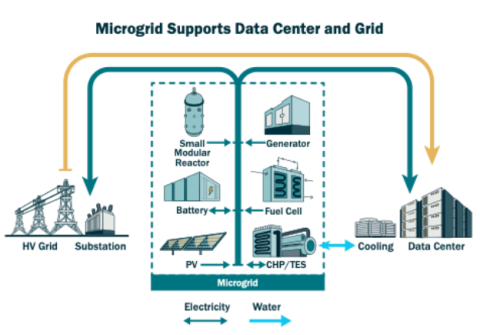
Microgrids offer a promising solution to enable the fast, reliable, and affordable build-out of data centers with shorter timelines relative to distribution/transmission grid expansion.