



RSS


Stay current on wind energy news from the U.S. Department of Energy. For more detailed updates on wind energy research and development activities, breakthroughs, and resources, see our wind newsletters.
Subscribe to the WETO E-Newsletter
Stay informed by receiving the latest wind energy news, events, and updates.
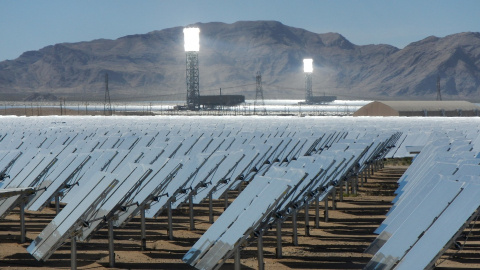
The giant mirrors used in concentrating solar-thermal power, known as heliostats, are often the most expensive parts of a CSP plant. The possibilities to innovate on heliostats and help reduce costs are endless.
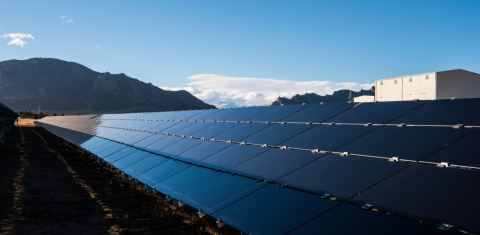
GSA issued a request for information to learn more about the availability of domestically manufactured solar PV panels and components.
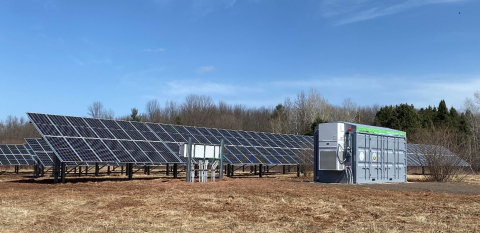
Solar energy can play an important role in increasing the resilience of the nation’s grid and the communities served by the grid.
DOE Announces $1.6 million for a jointly funded project supporting the coexistence of offshore wind with bats on the West Coast.
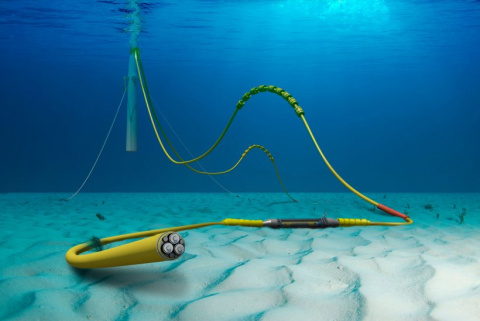
DOE’s Pacific Northwest National Laboratory (PNNL) will conduct a literature review of West Coast offshore wind transmission research to date, covering potential interconnections along California, Oregon, and Washington coastlines.
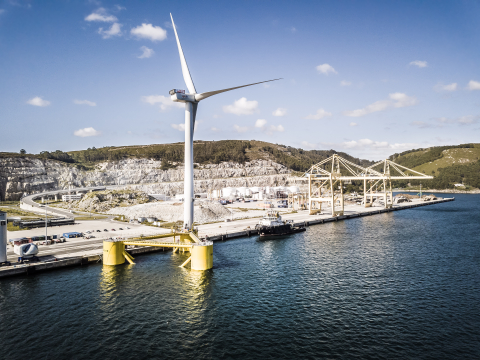
An NREL study will outline a strategic network of U.S. West Coast ports and port infrastructure upgrades that could collaboratively unlock the potential of commercial-scale floating offshore wind energy technology deployment.
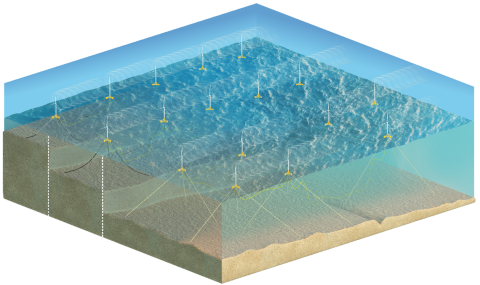
By developing a design toolset and reference designs for large-scale U.S. floating offshore wind farms, the Floating Offshore Wind Array Design project will inform design decisions and help ensure cost-efficient and responsible deployment.
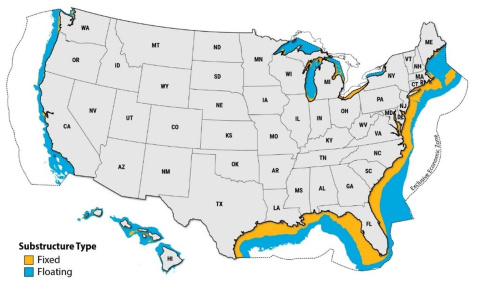
Floating offshore wind potential offers more than two times the energy equivalent of annual U.S. electricity consumption, even after accounting for relative technical suitability in support of responsible offshore wind energy deployment.
The National Offshore Wind Research and Development Consortium (NOWRDC), which was established with funding from the U.S. Department of Energy (DOE), has selected five new projects to receive a total of $3.5 million for ocean coexistence and transmission.
President Biden signed the Inflation Reduction Act into law, expanding the Federal Tax Credit for Solar Photovoltaics, also known as the Investment Tax Credit (ITC).